IOC Adopts Uniform Female-Category Eligibility Rule for 2028 Olympics, Excluding Transgender Women
The IOC has replaced its federation-by-federation approach with a single Olympic rule limiting female-category events to biological females verified through one-time SRY gene screening from Los Angeles 2028 onward.
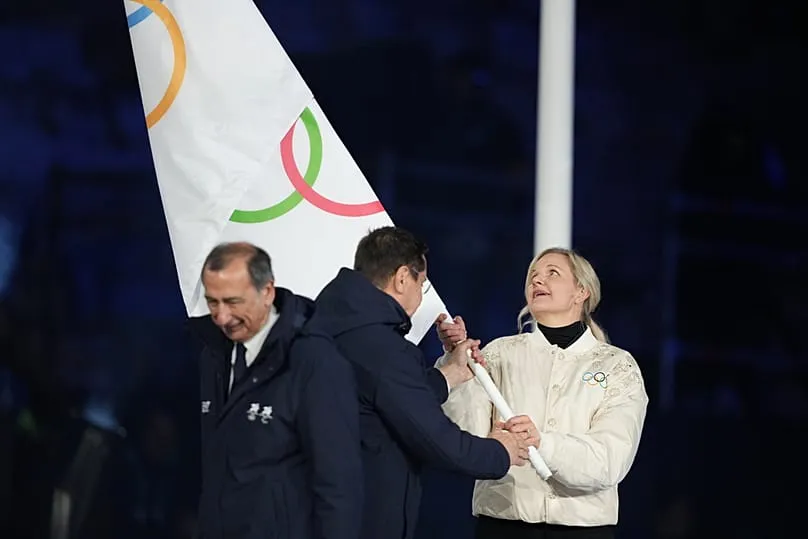
The International Olympic Committee has made one of the most consequential eligibility decisions in modern Olympic sport, replacing its looser federation-by-federation framework with a single rule for female-category events at future Olympic Games. Under the policy announced on Thursday, participation in women’s Olympic events will be limited to biological females, with eligibility determined through a one-time SRY gene screening intended to identify male sex development. The change is set to apply from the Los Angeles 2028 Olympics onward and does not apply retroactively to earlier Games.
That alone makes the decision globally newsworthy, but the deeper significance lies in what the IOC is really doing: it is ending years of strategic ambiguity. Since 2021, the committee had largely pushed responsibility down to individual international federations, allowing sports to set their own rules according to their own reading of science, risk and fairness. The result was a patchwork in which athletics, swimming, cycling and some other sports had already moved toward tighter restrictions, while other federations were left with looser or more contested standards. The new policy is the IOC’s attempt to impose a universal Olympic baseline after several years of political pressure, legal conflict and public controversy.
The policy as described in the cluster signals has several core components that matter. First, the IOC says female-category eligibility at its events will be limited to biological females. Second, it says this will be determined through a one-time test for the SRY gene, using saliva, cheek swab or blood sample methods that the committee says are the least intrusive currently available. Third, the committee says the rule is aimed at Olympic and other IOC elite events, not at grassroots or recreational sport. Fourth, the same policy will also affect at least some athletes with differences in sex development, moving the issue beyond the narrower political debate over transgender participation alone.
IOC president Kirsty Coventry has framed the decision as a fairness and safety measure rather than a culture-war intervention. The committee’s stated case is that male puberty and male sex development create durable performance advantages in strength, power and endurance that remain relevant in elite competition, where even very small margins determine podium places. The IOC’s policy material, as summarized in the reporting, points to claimed performance advantages in some event types ranging from roughly 10 to 12 percent in endurance and speed disciplines to more than 100 percent in certain explosive power contexts. Those figures will be central to the committee’s defense of the policy if it faces legal scrutiny.
Supporters of the change will argue that the IOC has finally aligned Olympic rules with what several major federations were already concluding in practice. From that perspective, the old system produced confusion, inconsistent enforcement and a credibility problem for women’s sport. Many conservatives, along with sports bodies such as World Athletics cited in the reporting, have argued for years that sex-based categories lose meaning if the Olympic movement does not preserve a clear biological threshold. On that reading, the new rule is not a radical departure but a delayed consolidation of a direction already visible across elite sport.
Critics, however, have serious grounds for challenge, and those objections are not trivial. Human-rights advocates are likely to attack the return of sex screening as invasive in principle even if the IOC describes the chosen test as minimally intrusive. Medical and legal critics are also likely to focus on the policy’s application to athletes with DSD conditions, where the scientific and ethical questions are more complicated than a simple male-female political binary suggests. France 24’s reporting points to criticism from the British Journal of Sports Medicine, which argued there is not high-quality scientific data on sports-performance advantage for athletes with DSDs who possess the SRY gene. That line of criticism could become a key fault line in any formal appeal.Olympic Committee bans transgender women from female eventsdw.com·SecondaryThe International Olympic Committee (IOC) said on Thursday that it would reintroduce genetic gender testing to determine eligibility for female events at the 2028 Los Angeles Olympic Games. "Eligibility for any female category event at the Olympic Games or any other IOC event, including individual and team sports, is now limited to biological females, determined on the basis of a one time gene screening," the committee said following an 18-month consultation.
The timing is also politically charged whether the IOC likes that characterization or not. The decision arrives as Los Angeles 2028 approaches and after the Trump administration in the United States made female-category eligibility in sport a clear policy priority. AP reported that the White House welcomed the decision and explicitly linked it to President Trump’s executive order, while other reporting noted that the IOC’s move reduces one possible line of conflict with U.S. policy ahead of the next Summer Games. Coventry has pushed back on the idea that the committee acted under outside pressure, saying the review was already a priority inside the Olympic movement. Still, it would be naïve to pretend the external political environment played no role in accelerating the demand for a uniform rule.
Recent Olympic controversies clearly set the backdrop. Coverage in the cluster repeatedly points back to the disputes around women’s boxing at the Paris 2024 Olympics, where Algerian boxer Imane Khelif and Taiwan’s Lin Yu-ting became central figures in a wider argument over sex eligibility, testing standards and the credibility of governing bodies. The IOC previously allowed both athletes to compete under its earlier framework, even as other bodies took different positions. That contradiction helped expose the weakness of the old model: when one federation, one court or one Games can produce a different standard from another, the Olympic movement ends up looking improvised on one of the most politically combustible issues in sport.
There is another layer here that deserves honest attention. The IOC is not merely choosing between inclusion and exclusion in the abstract; it is choosing which value gets presumptive priority at the highest level of women’s elite sport. Under the new rule, the presumption is clearly in favor of categorical sex-based protection over individualized case handling. That is a defensible position, especially if one believes the female category only functions when eligibility is easy to define and consistently enforced. But it also means the committee is accepting the likelihood of litigation, reputational backlash and renewed accusations that it has moved away from its own rhetoric about universal access to sport.
The legal fight now looks less hypothetical than inevitable. AP reports that the policy could be challenged at the Court of Arbitration for Sport in Lausanne, and the recent history of sex-eligibility disputes suggests well-funded challenges are entirely plausible. Past cases involving Dutee Chand and Caster Semenya show that sex-classification rules do not remain confined to press conferences or policy PDFs for long. The decisive question will not simply be whether the IOC can state a principle of fairness; it will be whether it can persuade arbitrators that its scientific reasoning, category design and testing methods are proportionate, evidence-based and lawfully applied across different athlete circumstances.
For athletes and federations, the immediate practical implication is that planning assumptions have changed now rather than in 2028. National committees, lawyers, medical advisers and sports governing bodies will spend the next two years working through eligibility procedures, appeals strategy and the treatment of athletes who fall into contested categories. For female athletes who long argued that fragmented rules undermined confidence in competition, the decision will be seen as overdue clarity. For transgender athletes and some DSD athletes, it will be seen as a door closing at the very point where Olympic access is supposed to be most universal.
The most sober conclusion is that the IOC has chosen uniformity over discretion, and it has done so in a climate where any decision was going to be politically explosive. The committee is betting that clearer rules will be easier to defend than a looser framework that satisfied almost no one. That bet may prove institutionally rational. It may also prove legally fragile. What is certain is that this is no niche rule change. It is a defining governance decision for the Los Angeles cycle and for the wider argument over what women’s sport is, who it is for, and who gets to set the boundary lines at the highest level of international competition.
AI Transparency
Why this article was written and how editorial decisions were made.
Why This Topic
This is the strongest non-duplicate story on the current board because it combines very high public salience, global reach and long-term institutional consequences. It is not a routine culture-war clip; it is a governing-rule change by the IOC that affects Olympic eligibility, legal exposure, athlete preparation and the political environment ahead of Los Angeles 2028. None of the latest published CT pieces substantially overlap with this topic, and the cluster’s score is the highest among distinct available stories.
Source Selection
The draft relies primarily on cluster signals from AP, Deutsche Welle, France 24 and Euronews because they contain the concrete policy details needed for a safe long-form piece: timing, scope, testing method, non-retroactivity, DSD implications, legal-challenge expectations and immediate political reactions. I limited factual claims to what is substantiated inside those signals and used broader analysis only where it clearly follows from the documented rule change and recent Olympic governance context.
Editorial Decisions
Framed the story in a neutral, descriptive way while giving genuine weight to both the fairness/protection case and the civil-liberties/DSD challenge case. Avoided moralizing language, kept the headline factual, and treated conservative support as a substantive position rather than a token reaction. Also separated confirmed policy details from forward-looking legal analysis.
Reader Ratings
About the Author
Sources
- 1.france24.comSecondary
- 2.apnews.comSecondary
- 3.dw.comSecondary
- 4.euronews.comSecondary
- 5.france24.comSecondary
- 6.cbsnews.comSecondary
- 7.channelnewsasia.comSecondary
Editorial Reviews
1 approved · 0 rejectedPrevious Draft Feedback (3)
• depth_and_context scored 4/3 minimum: The article provides substantial background on the years of ambiguity and the political pressures leading to this decision, explaining the 'why it matters' aspect well. However, it could benefit from exploring the historical context of sex-based categories in sport more deeply, tracing the evolution of these policies over time. • perspective_diversity scored 4/3 minimum: The article incorporates viewpoints from supporters (federations, conservatives), critics (human rights advocates, medical professionals), and the IOC itself, presenting a relatively balanced range of perspectives. It could be strengthened by including direct quotes or perspectives from transgender athletes affected by the policy. • analytical_value scored 4/3 minimum: The article goes beyond simply recounting events, offering analysis of the IOC's motivations, the potential legal challenges, and the broader implications for women's sport. It effectively highlights the trade-offs between inclusion and categorical protection. Warnings: • [article_quality] narrative_structure scored 3 (borderline): The article generally follows a logical flow, presenting the policy, its background, and potential consequences. However, the structure feels somewhat list-like at times, and a stronger, more compelling lede could immediately grab the reader's attention and establish the article's central argument more effectively. • [article_quality] filler_and_redundancy scored 2 (borderline): The article suffers from significant redundancy, with numerous paragraphs repeating the same core information and relying heavily on the same citation markers ([1][2][3][4]). This inflates the length and detracts from the overall clarity; remove repetitive phrasing and consolidate information to improve conciseness. • [article_quality] language_and_clarity scored 3 (borderline): The writing is generally clear, but the frequent use of phrases like 'cluster signals' and the reliance on summarized reporting can feel impersonal and slightly opaque. Avoid vague language and strive for more direct and accessible phrasing, and be cautious about using labels like 'conservatives' without further explanation of their specific positions.
1 gate errors: • [image_relevance] Image alt_accuracy scored 2/3 minimum: The alt text claims the image is from the 2026 Winter Olympics, but the clothing and overall aesthetic suggest a more recent event. This mischaracterization of the scene's timing significantly detracts from the alt text's accuracy.
1 gate errors: • [image_relevance] Image alt_accuracy scored 2/3 minimum: The alt text claims the image is from the 2026 Winter Olympics, but the clothing and overall aesthetic suggest a more recent event. This mischaracterization of the scene's timing significantly detracts from the alt text's accuracy.