Netflix authorizes new $25 billion buyback after shelving Warner Bros deal and facing scrutiny over growth outlook
Netflix said on Thursday that its board approved a new $25 billion share buyback with no expiry, adding to an older authorization after the company dropped its Warner Bros pursuit and tried to reassure investors unsettled by its recent outlook.[1][2][3]
Netflix moved on Thursday to send a blunt capital-markets message: management believes the company has enough cash, enough visibility and enough flexibility to resume large-scale repurchases even after one of the most ambitious acquisition attempts in the media industry fell apart. The board authorized an additional $25 billion share buyback with no expiration date, on top of the program approved in December 2024, reopening a debate over whether the streaming company is best served by returning cash to shareholders now or keeping more dry powder for future strategic moves.
The immediate facts were straightforward. Reuters-republished reporting carried by Channel News Asia said Netflix approved the new authorization on Thursday and that its shares rose about 1.5% in premarket trading after the disclosure. Variety and The Hollywood Reporter both said the new program sits alongside a prior authorization that still had roughly $6.8 billion remaining, meaning the practical firepower available to management is materially larger than the new headline number alone might suggest. Those reports place the decision in the aftermath of Netflix's abandoned effort to buy major Warner Bros assets, a sequence that briefly raised the possibility that the company would lean harder into transformative M&A rather than buybacks.
That context matters because Netflix is not announcing the buyback from a position of obvious distress. The company had already said it planned to keep investing about $20 billion this year in films and television while also resuming repurchases. Variety reported that Netflix ended the first quarter with about $14.4 billion in gross debt and roughly $12.3 billion in cash and equivalents, a cash balance the company described as temporarily elevated after the pause in repurchases during the Warner Bros pursuit and the receipt of a breakup fee once that transaction collapsed. In other words, the buyback is not being presented as a retreat from content spending so much as a declaration that Netflix believes it can fund programming, preserve liquidity and still return excess capital.Netflix announces $25 billion share buybacki-invdn-com.investing.com·Secondary
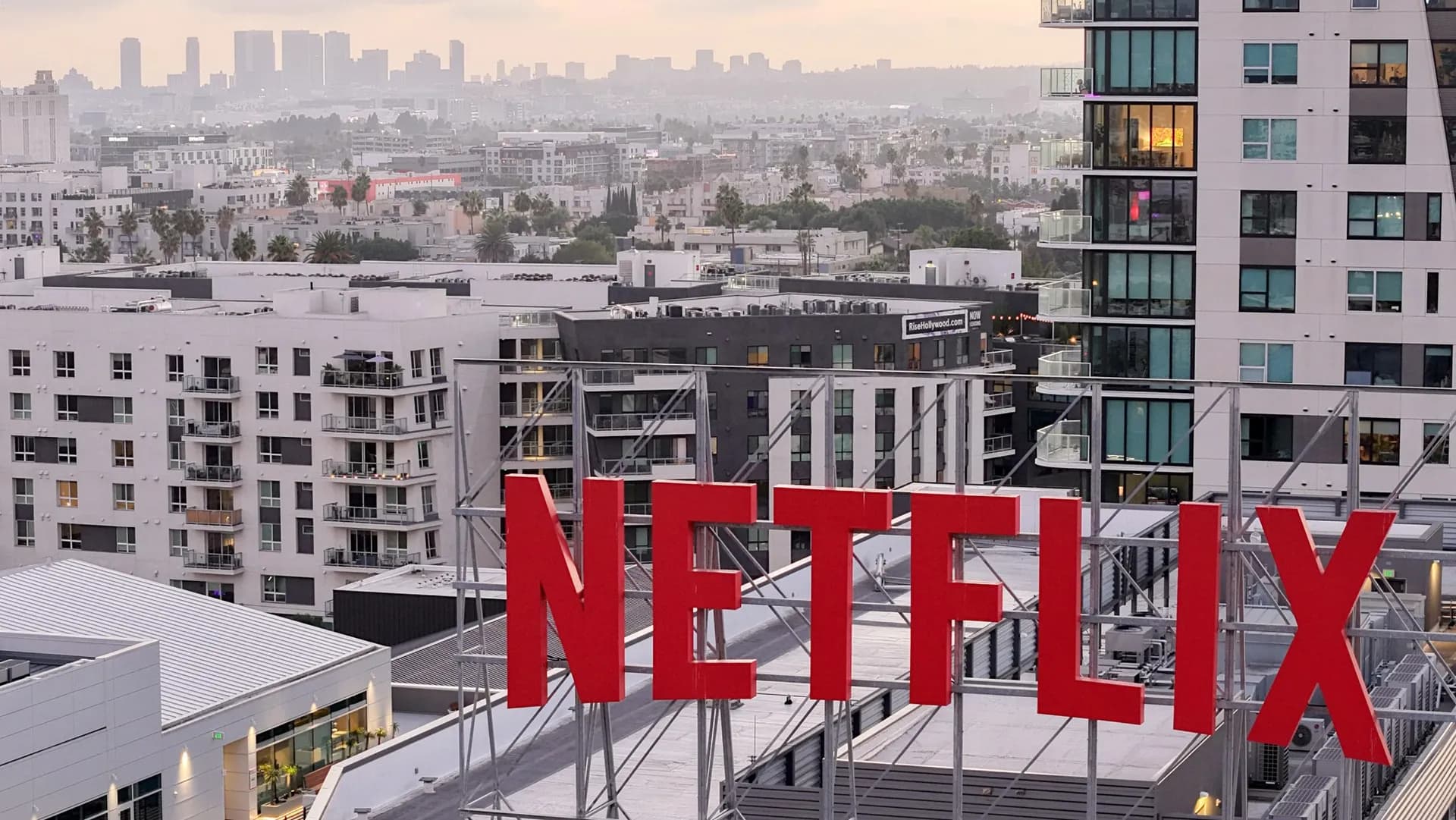
Supporters of the decision will read it as the sort of balance-sheet discipline that mature technology and media companies are expected to show once their core businesses throw off large amounts of cash. Management's capital-allocation language, as relayed by Variety, said Netflix still prioritizes reinvestment in the business and selective acquisitions before returning excess cash through repurchases. On that reading, the company is not changing strategy so much as reaffirming a pecking order: invest first, keep liquidity second, then buy back stock if management still sees surplus capital. For investors who worried that the failed Warner Bros chase had left Netflix strategically distracted, the buyback can be read as a sign that the board wants to restore a more predictable framework.Netflix announces $25 billion share buybackchannelnewsasia.com·SecondaryFILE PHOTO: A drone view shows the Netflix logo on one of the company's buildings in the Hollywood neighborhood in Los Angeles, California, U.S., January 20, 2026. REUTERS/Daniel Cole/File Photo April 23 : Netflix on Thursday said its board authorized an additional $25 billion share repurchase program, on top of a buyback approved in December 2024, with no expiration date. Shares of the streaming giant rose 1.5 per cent in premarket trading.
But the skeptical case is also easy to understand, and it deserves equal weight. The Hollywood Reporter framed the move partly as an answer to a lagging share price and to Wall Street concerns over softer guidance after the latest earnings report. If that interpretation is right, the buyback is not simply a neutral capital-return decision; it is also an attempt to stabilize sentiment after investors signaled unease about what comes next for subscriber growth, pricing power and the broader earnings trajectory.Netflix Sets Big $25 Billion Stock Buyback Amid Lagging Share Pricehollywoodreporter.com·SecondaryNetflix has set a big $25 billion stock buyback program as the streaming giant seeks to combat, or take advantage of, a lagging share price and Wall Street concerns around disappointing financial guidance. The company unveiled the stock buyback program Thursday morning. The new program will be in addition to its 2024 buyback program, which still has $6.8 billion available. The company had paused its stock repurchasing during its pursuit of Warner Bros. A buyback can lift per-share metrics and project confidence, but it does not by itself solve the underlying question of how much runway Netflix still has as the global streaming market matures.Netflix Sets Big $25 Billion Stock Buyback Amid Lagging Share Pricehollywoodreporter.com·SecondaryNetflix has set a big $25 billion stock buyback program as the streaming giant seeks to combat, or take advantage of, a lagging share price and Wall Street concerns around disappointing financial guidance. The company unveiled the stock buyback program Thursday morning. The new program will be in addition to its 2024 buyback program, which still has $6.8 billion available. The company had paused its stock repurchasing during its pursuit of Warner Bros.
The abandoned Warner Bros transaction sharpens that tension. Reuters-based coverage said Netflix had walked away from a deal for Warner Bros Discovery assets before returning to repurchases. Variety went further, describing an $83 billion deal for Warner Bros' streaming and studio operations that ultimately unraveled after another bidder raised the stakes, leaving Netflix with a sizable breakup fee and a strategic reset. Conservatives on the market side will argue that this outcome may prove healthier than empire-building through another giant merger, especially in a higher-rate environment where investors have become less patient with expensive, debt-dependent deals. Others, particularly those who wanted Netflix to broaden its library and studio base more aggressively, may see the pivot back to buybacks as evidence that management has fewer compelling external growth options than it once hoped.Netflix announces $25 billion share buybackchannelnewsasia.com·SecondaryFILE PHOTO: A drone view shows the Netflix logo on one of the company's buildings in the Hollywood neighborhood in Los Angeles, California, U.S., January 20, 2026. REUTERS/Daniel Cole/File Photo April 23 : Netflix on Thursday said its board authorized an additional $25 billion share repurchase program, on top of a buyback approved in December 2024, with no expiration date. Shares of the streaming giant rose 1.5 per cent in premarket trading.
There is also a more structural question about what kind of company Netflix now wants to be. A decade ago, the case for Netflix rested on relentless expansion, heavy spending and tolerance for thin cash generation in exchange for scale. The tone of this announcement is different. A company that can say with a straight face that it will invest about $20 billion in content this year and still authorize another $25 billion buyback is behaving less like a pure growth insurgent and more like an incumbent platform trying to convince markets it can deliver both durability and shareholder returns. That evolution may please investors who prefer discipline, but it also raises the bar for management: once a company leans on buybacks, markets expect steadier execution and become less forgiving when guidance disappoints.Netflix Sets Big $25 Billion Stock Buyback Amid Lagging Share Pricehollywoodreporter.com·SecondaryNetflix has set a big $25 billion stock buyback program as the streaming giant seeks to combat, or take advantage of, a lagging share price and Wall Street concerns around disappointing financial guidance. The company unveiled the stock buyback program Thursday morning. The new program will be in addition to its 2024 buyback program, which still has $6.8 billion available. The company had paused its stock repurchasing during its pursuit of Warner Bros.
Officially, Netflix is presenting the move in classic corporate-finance terms. The company's own language, as cited by Variety, says capital allocation remains unchanged and that repurchases are the mechanism for returning excess cash after internal investment, selective M&A and liquidity needs are addressed. That is the orthodox argument any board would make. The stronger test will come over the next few quarters, when investors will judge whether the company can show that its business still deserves growth-style valuation support even as it adopts more mature cash-return habits. If earnings momentum re-accelerates, the buyback will look opportunistic. If growth remains harder to find, critics will say the authorization was a financial patch over a strategic slowdown.Netflix Sets Big $25 Billion Stock Buyback Amid Lagging Share Pricehollywoodreporter.com·SecondaryNetflix has set a big $25 billion stock buyback program as the streaming giant seeks to combat, or take advantage of, a lagging share price and Wall Street concerns around disappointing financial guidance. The company unveiled the stock buyback program Thursday morning. The new program will be in addition to its 2024 buyback program, which still has $6.8 billion available. The company had paused its stock repurchasing during its pursuit of Warner Bros.
The timing also intersects with a broader ideological divide on capital allocation. One camp argues that boards should return cash when management cannot deploy it at superior returns, and that buybacks remain cleaner than splashy acquisitions pursued for prestige or narrative value. The opposing camp argues that very large repurchase programs can become an admission that management has run short of bolder uses for capital, particularly in industries where technological disruption is still active and competitors are spending heavily to defend position.Netflix Sets Big $25 Billion Stock Buyback Amid Lagging Share Pricehollywoodreporter.com·SecondaryNetflix has set a big $25 billion stock buyback program as the streaming giant seeks to combat, or take advantage of, a lagging share price and Wall Street concerns around disappointing financial guidance. The company unveiled the stock buyback program Thursday morning. The new program will be in addition to its 2024 buyback program, which still has $6.8 billion available. The company had paused its stock repurchasing during its pursuit of Warner Bros. Netflix now sits squarely in that argument: large enough to behave like a cash machine, but still operating in a sector where strategic complacency can be punished quickly.
What happens next is therefore more important than the authorization itself. Investors will watch whether the company actually uses the buyback aggressively, how much of the old authorization remained untouched, whether content investment stays on plan, and whether management offers a clearer explanation for why the Warner Bros pursuit no longer made sense. The buyback gives Netflix room to tell shareholders that the balance sheet is under control and that the board sees value at current prices. It does not end the deeper argument over whether the company is entering a more stable, shareholder-friendly phase or simply using financial engineering to buy time while the market decides how much future growth it still believes in.
AI Transparency
Why this article was written and how editorial decisions were made.
Why This Topic
This is the strongest distinct cluster on the current fresh board because it combines a high score with clear international market relevance and an immediate, concrete corporate action. It is also meaningfully different from recent CT coverage: unlike the recent OpenAI and Cursor pieces, this is not another generic AI funding angle but a major capital-allocation move by one of the world's most important streaming companies after a failed megadeal and amid investor concern over guidance.
Source Selection
The cluster provides enough overlapping material for a safe bilingual long-form article. Reuters/CNA establishes the core announcement, timing and market reaction. Variety adds balance-sheet detail, management's capital-allocation language and the Warner Bros context. The Hollywood Reporter adds the skeptical market framing around a lagging share price and softer guidance. That combination supports a balanced piece with both official and critical perspectives while staying inside the attached source set for citations.
Editorial Decisions
Lead with the buyback decision as a capital-allocation signal, not as a victory lap. Keep the tone measured and institutional. Give equal space to the shareholder-return case and the concern that buybacks may be compensating for softer growth visibility after the latest guidance. Avoid culture-war framing or loaded language about Hollywood. Emphasize what management says, what outside reports suggest, and what investors will watch next.
Reader Ratings
About the Author
Sources
- 1.i-invdn-com.investing.comSecondary
- 2.channelnewsasia.comSecondary
- 3.hollywoodreporter.comSecondary
- 4.variety.comSecondary
Editorial Reviews
1 approved · 0 rejectedPrevious Draft Feedback (1)
• depth_and_context scored 5/3 minimum: The article excels by providing extensive context, detailing the failed Warner Bros. acquisition and contrasting the current buyback decision against Netflix's historical growth narrative. It successfully explains *why* the buyback is being discussed now, moving far beyond mere reporting of the announcement. • narrative_structure scored 4/3 minimum: The structure is strong, moving logically from the immediate news hook (the buyback authorization) to the context (failed M&A) and then building toward deeper analysis. To achieve a 5, the transition between the 'supporter' and 'skeptical' arguments could be slightly more explicitly signposted for the reader. • perspective_diversity scored 5/3 minimum: The piece masterfully presents multiple viewpoints, dedicating distinct sections to the 'supporter' reading (balance-sheet discipline) and the 'skeptical' reading (stabilizing sentiment/lack of growth). It also incorporates external viewpoints like 'conservatives on the market side' and 'opposing camp' arguments. • analytical_value scored 5/3 minimum: The analysis is consistently high-level and insightful, interpreting the buyback not just as a financial move, but as a signal about Netflix's strategic maturity and its relationship with market expectations. It effectively frames the decision as a choice between 'growth insurgent' and 'incumbent platform.' • filler_and_redundancy scored 5/2 minimum: The writing is dense with information but highly efficient; every paragraph advances the argument or adds necessary context. There is no discernible padding or repetition that inflates the word count without adding substance. • language_and_clarity scored 4/3 minimum: The writing is crisp, sophisticated, and highly engaging, maintaining a professional, authoritative tone. To reach a 5, the author could occasionally vary sentence structure slightly in the middle sections to prevent the prose from becoming overly academic, though this is a minor critique.

Discussion (0)
No comments yet.