Russia and Ukraine move into a 32-hour Easter truce as both sides test whether a holiday pause can hold
On Thursday, Vladimir Putin announced a 32-hour Orthodox Easter ceasefire and Volodymyr Zelenskyy said Ukraine would observe reciprocal steps, creating a narrow test of whether a holiday pause can interrupt a war that has repeatedly outlasted earlier truce efforts.[1][2][3][4]
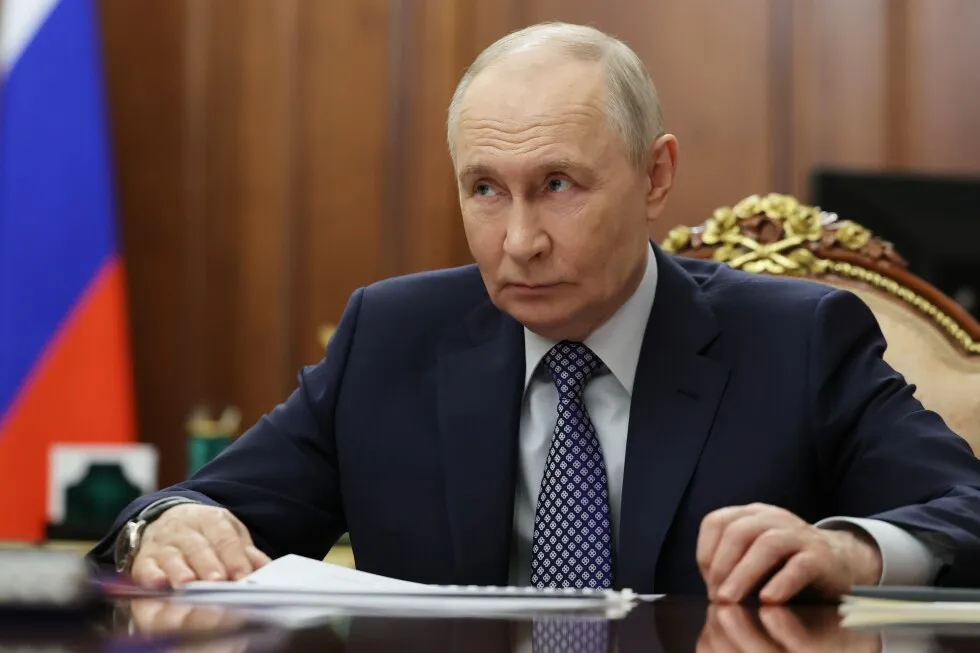
On Thursday, Russian President Vladimir Putin announced a 32-hour ceasefire for Orthodox Easter, ordering Russian forces to halt military action from 4 p.m. Saturday until the end of Sunday, while framing the pause as a humanitarian gesture tied to the shared religious calendar in Russia and Ukraine. Ukraine’s leadership responded by saying it was prepared for reciprocal steps, turning what began as a unilateral Kremlin declaration into a short-lived but potentially consequential test of whether even a narrow holiday truce can hold on a front that has been active for more than four years.
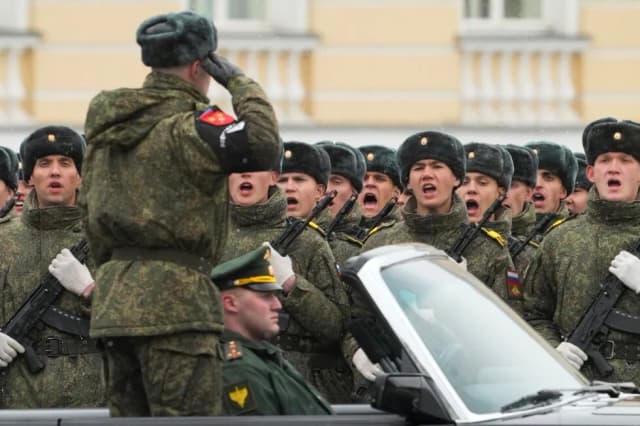
The immediate structure of the proposal is unusually specific. Kremlin language cited in multiple reports said troops had been ordered to stop hostilities in all directions for the defined Easter period, while also remaining ready to respond to what Moscow described as provocations or aggressive actions. That caveat matters because it gives Russia room to argue that any renewed fighting was defensive rather than a breach of the declared pause, a pattern critics say has weakened earlier short ceasefire efforts in this war.
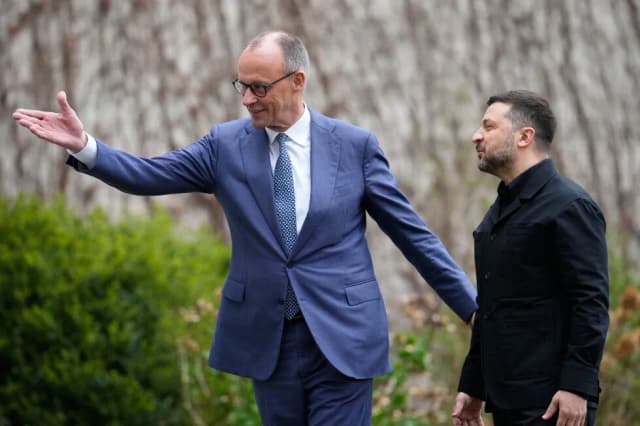
Kyiv did not reject the proposal outright. President Volodymyr Zelenskyy said Ukraine had repeatedly stated it was ready for mirror or reciprocal steps and would act accordingly during the Easter holiday period. Ukrainian officials also tied their position to earlier proposals for a broader halt to attacks, especially on energy infrastructure, arguing that if a pause is possible for a religious holiday it should also be possible to extend restraint into a more durable path toward diplomacy.
That Ukrainian response reflects a longer line Kyiv has been pushing earlier this week. Zelenskyy had already called for a holiday-related reduction in attacks and said the idea of stopping strikes on energy sites had been relayed through the United States, which has been involved in contacts between Moscow and Kyiv. Ukrainian Foreign Minister Andrii Sybiha likewise argued that there was no need to resume strikes after Easter if the two sides could demonstrate even a temporary ability to hold fire.
Still, the political and military backdrop argues for caution rather than celebration. Previous efforts to secure ceasefires have produced little lasting effect, and last Easter’s roughly 30-hour pause ended with each side accusing the other of violations. Russia has also resisted a broader 30-day unconditional truce backed by Ukraine and the United States, preferring to talk about a wider settlement on its own terms rather than first locking in a longer battlefield pause.
That history explains why this weekend’s truce is being watched less as a breakthrough than as a stress test. If both armies sharply reduce fire even for 32 hours, officials and mediators will be able to argue that command-and-control channels exist for something larger. If the truce collapses quickly, skeptics will say the episode merely confirmed what many on both sides already believe: that symbolic pauses can be announced faster than they can be enforced across a roughly 1,250-kilometer front line.
The timing also intersects with wider diplomacy. Multiple reports said U.S.-led mediation efforts had sought to keep some form of negotiation alive even as Washington’s attention has been pulled toward the Middle East and Iran-related tensions. Reuters also reported that Putin envoy Kirill Dmitriev was in the United States for discussions touching both peace efforts and U.S.-Russia economic cooperation, though Kremlin spokesman Dmitry Peskov said the Easter ceasefire proposal itself had not been discussed in advance with Washington and was not tied to any formal revival of three-way talks.Ukraine: Russia's Putin declares Easter ceasefiredw.com·SecondaryRussian President Vladimir Putin on Thursday announced a ceasefire in the war in Ukraine for the Orthodox Easter holiday, the Kremlin said. Ukrainian President Volodymyr Zelenskyy had called for an Easter ceasefire earlier this week. Putin had declared a similar ceasefire last Easter, but each sides accused the other of violations. Following Putin's announcement, Zelenskyy said Ukraine will "act accordingly." Orthodox Christians are due to mark Easter on April 12.
For Moscow, the move offers at least three possible advantages even if the truce is brief. It allows the Kremlin to present Russia as responsive to a religious holiday, to test whether Ukraine will publicly match a Russian initiative, and to signal to outside actors, including Washington, that it remains open to calibrated pauses without conceding its opposition to a larger unconditional ceasefire. Supporters of that line will say limited, verifiable pauses are more realistic than sweeping peace formulas that neither army is ready to implement.
For Kyiv and its backers, the same episode can be read differently. Ukrainian officials can point out that Kyiv had been calling for restraint first, especially around civilian energy infrastructure, and that Russia is only now embracing a narrower version after dismissing broader proposals. More skeptical observers will also note that Moscow kept language about countering provocations in its decree, preserving ambiguity over how either side could justify renewed strikes if incidents occur during the holiday window.
What happens next is likely to matter more than the announcement itself. If the Easter pause is mostly observed, pressure will grow for both capitals to explore whether energy-site protections or another limited ceasefire can survive beyond Sunday. If violations mount quickly, the episode will reinforce the harder view, common among military and conservative security analysts alike, that short symbolic truces do little without enforcement, sequencing and credible political follow-through from both governments. Either way, the weekend now serves as a real-world measure of whether a war that has consumed Europe’s security agenda can still make room, however briefly, for restraint.
There is also a narrower operational question beneath the diplomacy. Because the truce window is short and clearly timed around Easter, it offers commanders on both sides a limited test of whether orders can travel quickly from political leaders to units spread across the front without first settling the much harder issues of territory, sanctions, security guarantees or long-term war aims. That is one reason supporters see value in the pause even if they doubt it will become a settlement, while detractors warn that a 32-hour halt can just as easily become a public-relations exercise unless restraint is visible in practice.
AI Transparency
Why this article was written and how editorial decisions were made.
Why This Topic
This is the strongest available story because a declared Russia-Ukraine Easter ceasefire carries immediate geopolitical significance, direct war-and-peace stakes and broad international relevance well beyond the region. It is more consequential than market-reaction or entertainment clusters on the board and is timely enough to justify urgent treatment, while still offering enough opposing perspectives to satisfy the platform's diversity and analytical-value gates.
Source Selection
The cluster contains a broad enough source mix to support a high-confidence draft without leaning on outside claims for numbered citations. AP provides the core mechanics of the ceasefire, Reuters adds the clearest language on Zelenskyy's reciprocal response and Peskov/Dmitriev context, while Politico, BBC and Al Jazeera reinforce Kyiv's view that a temporary pause should lead toward something longer. That combination supports a balanced piece anchored in official positions, prior ceasefire history and immediate diplomatic implications.
Editorial Decisions
Keep the piece descriptive and analytical, not celebratory. Give Moscow's stated rationale and Kyiv's response fair space, but foreground the practical question of enforceability because previous Easter and wartime ceasefire efforts have often collapsed quickly. Avoid moralizing language and avoid assuming the truce is proof of peace momentum. Emphasize what each side says, what has failed before, and what mediators may infer if the pause broadly holds.
Reader Ratings
About the Author
Sources
- 1.euronews.comSecondary
- 2.channelnewsasia.comSecondary
- 3.euronews.comSecondary
- 4.theguardian.comSecondary
- 5.dw.comSecondary
- 6.aljazeera.comSecondary
- 7.bbc.comSecondary
- 8.france24.comSecondary
- 9.abcnews.comUnverified
- 10.cbsnews.comSecondary
- 11.lemonde.frSecondary
- 12.politico.euSecondary
- 13.apnews.comSecondary
- 14.france24.comSecondary
- 15.france24.comSecondary
Editorial Reviews
1 approved · 0 rejectedPrevious Draft Feedback (3)
• depth_and_context scored 5/3 minimum: The article excels at providing necessary context by referencing past ceasefire failures, the specific operational challenges (1,250-km front), and the broader diplomatic backdrop (US attention shifting to the Middle East). It moves far beyond merely stating the announcement. • narrative_structure scored 4/3 minimum: The structure is strong, moving logically from the initial announcement to the differing reactions, historical context, and finally to future implications. It could benefit from a slightly punchier lede that immediately frames the stakes, rather than just reporting the announcement. • perspective_diversity scored 5/3 minimum: The piece masterfully presents multiple viewpoints: the Kremlin's framing, Kyiv's demands for reciprocity, skeptical observers, and the arguments from both sides' supporters. This balance is crucial for objective reporting. • analytical_value scored 5/3 minimum: The article consistently interprets the 'why' and 'what next,' framing the truce as a 'stress test' and analyzing the strategic advantages for both Moscow and Kyiv. It avoids mere recounting of facts. • filler_and_redundancy scored 5/2 minimum: The writing is dense with information but highly efficient; every paragraph advances the analysis or context. There is no discernible padding or repetition that inflates the word count without adding substance. • language_and_clarity scored 4/3 minimum: The writing is highly professional, precise, and engaging. It avoids loaded political labels, instead focusing on describing specific policies (e.g., energy infrastructure protection) and stated positions, which is excellent journalistic practice.
1 gate errors: • [structure] Content too short (5716 chars, min 6000)
1 gate errors: • [structure] Content too short (5716 chars, min 6000)
Discussion (0)
No comments yet.