The Netherlands clears Tesla's supervised Full Self-Driving, opening a new test of Europe's approach to road AI
Dutch regulators approved Tesla's supervised Full Self-Driving for use in the Netherlands on Friday after more than 18 months of testing, making it the first such authorization in Europe and setting up a wider EU debate over driver-assistance rules, liability and competition.[1][2]
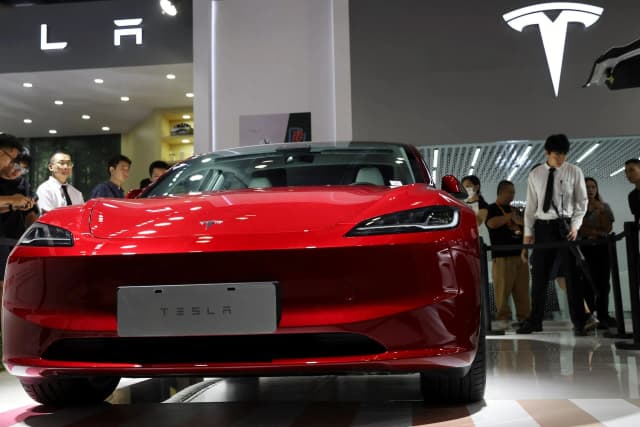
On Friday, Dutch regulators gave Tesla a notable European breakthrough by approving the supervised version of its Full Self-Driving system for use in the Netherlands, the first authorization of its kind for the company in Europe. The decision matters beyond one country because the Netherlands' vehicle authority, RDW, said it plans to seek a route for broader recognition across the European Union, turning what looks like a national approval into a test case for how quickly Europe wants advanced driver-assistance features on public roads. For Tesla, which has spent years arguing that software and automation should become core revenue drivers, the Dutch decision is both a regulatory win and a badly needed commercial opening in a region where sales momentum has been uneven.Tesla's self-driving software gets Dutch go-ahead, in boost for EU ambitionschannelnewsasia.com·SecondaryFILE PHOTO: A Tesla Model 3 is shown driving on the highway with FSD 14.2.2.3 self-driving supervised software in Irvine, California, U.S., January 28, 2026. REUTERS/Mike Blake/File Photo AMSTERDAM/SAN FRANCISCO, April 10 : Tesla on Friday said Dutch regulators had approved the use of its driver assistance software which handles most driving tasks on highways and city streets under human supervision, the first regulatory sign‑off for the technology in Europe.
The approval is narrower than Tesla's marketing language sometimes suggests. RDW said the system is a driver-assistance tool, not an autonomous vehicle capability, and that the human behind the wheel remains responsible at all times and must be ready to take over immediately. CBS, summarizing the regulator's statement, said the feature can handle steering, braking, route navigation and parking, but only under active driver supervision. Reuters also reported that RDW explicitly said the European version is not comparable to the U.S. product on a one-for-one basis because EU safety approvals impose stricter conditions before public-road use. In other words, Europe is not simply importing the American debate; it is trying to write its own rulebook around a similar technology.Tesla's self-driving software gets Dutch go-ahead, in boost for EU ambitionschannelnewsasia.com·SecondaryFILE PHOTO: A Tesla Model 3 is shown driving on the highway with FSD 14.2.2.3 self-driving supervised software in Irvine, California, U.S., January 28, 2026. REUTERS/Mike Blake/File Photo AMSTERDAM/SAN FRANCISCO, April 10 : Tesla on Friday said Dutch regulators had approved the use of its driver assistance software which handles most driving tasks on highways and city streets under human supervision, the first regulatory sign‑off for the technology in Europe.
That distinction is central to the political and commercial fight around Tesla's system. Supporters of faster approval argue that Europe has been slow to let domestic drivers test advanced assistance tools that are already available in the United States, and they see the Dutch move as a sign that regulators can permit useful automation without waiting for full autonomy. Tesla's European arm said the rollout would begin shortly in the Netherlands and presented the decision as evidence that the system can spread to more countries soon. Reuters reported that Morningstar analyst Seth Goldstein expects the Dutch approval, and then possible approvals elsewhere in Europe, to help sales by giving consumers a tangible software reason to revisit the brand.Tesla wins Dutch approval to use self-driving features, a first for Europecbsnews.com·SecondaryTesla owners in the Netherlands can now use their cars' self-driving feature — with some conditions — making it the first European country to approve the feature. The country's RDW agency for roadworthiness certifications said Friday that Tesla's driver assistance system can now be used in the Netherlands "with possible future expansion to all member states of the European Union." The agency said drivers would need to be in the vehicle and keep a watchful eye on it. That is the bullish case: software differentiation could help offset a maturing EV market and price pressure from rivals.Tesla wins Dutch approval to use self-driving features, a first for Europecbsnews.com·SecondaryTesla owners in the Netherlands can now use their cars' self-driving feature — with some conditions — making it the first European country to approve the feature. The country's RDW agency for roadworthiness certifications said Friday that Tesla's driver assistance system can now be used in the Netherlands "with possible future expansion to all member states of the European Union." The agency said drivers would need to be in the vehicle and keep a watchful eye on it.
The skeptical case is at least as strong, and Europe is likely to hear a great deal more of it in the coming months. The Dutch regulator itself emphasized that this is not hands-off freedom from responsibility, but an assistance layer that still depends on driver attention. Electrek, which is generally favorable to EV adoption but cautious on Tesla's framing, argued that the company continues to blur the line between advanced Level 2 assistance and actual self-driving, and noted that other manufacturers already have narrower European approvals for comparable functions on select roads or under tighter conditions. That matters because Tesla has tied a large share of its future narrative to artificial-intelligence-led driving software and robotaxis, while U.S. investigations, lawsuits and public criticism have kept pressure on whether drivers can be expected to supervise a highly capable system consistently over time. Europe is now stepping into that argument instead of watching it from afar.Tesla wins Dutch approval to use self-driving features, a first for Europecbsnews.com·SecondaryTesla owners in the Netherlands can now use their cars' self-driving feature — with some conditions — making it the first European country to approve the feature. The country's RDW agency for roadworthiness certifications said Friday that Tesla's driver assistance system can now be used in the Netherlands "with possible future expansion to all member states of the European Union." The agency said drivers would need to be in the vehicle and keep a watchful eye on it.
The Dutch process also suggests that regulators were not rushed into the decision. RDW and the reporting around the approval say the system underwent more than 18 months of testing and analysis before Friday's authorization. Electrek added that the underlying review involved a large body of road, track and compliance work under the UN R-171 framework, with Tesla submitting extensive documentation and a national approval structure that still does not automatically bind the rest of the bloc. Reuters said RDW will now send the application onward to the European Commission, where member states would vote on broader validity, and added that even without a majority at the EU level, individual countries may still choose to permit the system separately. That means the next stage is likely to be messy, political and uneven rather than a neat continental green light.Tesla wins Dutch approval to use self-driving features, a first for Europecbsnews.com·SecondaryTesla owners in the Netherlands can now use their cars' self-driving feature — with some conditions — making it the first European country to approve the feature. The country's RDW agency for roadworthiness certifications said Friday that Tesla's driver assistance system can now be used in the Netherlands "with possible future expansion to all member states of the European Union." The agency said drivers would need to be in the vehicle and keep a watchful eye on it.
Tesla's business situation gives the story added weight. Reuters reported that the company has been dealing with European sales pressure tied to an aging lineup, sharper competition and consumer backlash to Elon Musk's hard-right political rhetoric, even though sales in Europe rose in February for the first time in more than a year. CBS likewise noted that some would-be buyers in Europe have been put off by Musk's politics while Chinese electric-vehicle competition has intensified. A Dutch approval for FSD Supervised does not fix those issues by itself, but it gives Tesla something it has lacked for some time in Europe: a fresh argument that its cars are software platforms with a distinctive feature set, not just electric vehicles in a crowded field. Investors and rivals will now watch whether the approval changes actual demand or mostly generates headlines.Tesla wins Dutch approval to use self-driving features, a first for Europecbsnews.com·SecondaryTesla owners in the Netherlands can now use their cars' self-driving feature — with some conditions — making it the first European country to approve the feature. The country's RDW agency for roadworthiness certifications said Friday that Tesla's driver assistance system can now be used in the Netherlands "with possible future expansion to all member states of the European Union." The agency said drivers would need to be in the vehicle and keep a watchful eye on it.
There is also a broader policy question about what Europe wants its road-safety regime to reward. One school of thought says regulators should welcome systems that can reduce fatigue, smooth traffic behavior and support drivers if they are tested rigorously and monitored carefully. RDW itself said proper use of the system can contribute positively to road safety, which is about as far as a cautious European regulator is willing to go without promising too much. The rival school says the bigger risk is not technical failure in a laboratory sense but human complacency in the real world: the better the software feels, the easier it is for drivers to overtrust it. That argument has been visible in American debates for years and will almost certainly define the European one as well.Tesla wins Dutch approval to use self-driving features, a first for Europecbsnews.com·SecondaryTesla owners in the Netherlands can now use their cars' self-driving feature — with some conditions — making it the first European country to approve the feature. The country's RDW agency for roadworthiness certifications said Friday that Tesla's driver assistance system can now be used in the Netherlands "with possible future expansion to all member states of the European Union." The agency said drivers would need to be in the vehicle and keep a watchful eye on it.
Officially, the Dutch decision remains a supervised experiment inside a legal framework, not a declaration that full autonomy has arrived. But politically it is more than that. It signals that at least one European regulator is willing to move from theoretical discussion to live public-road deployment, provided the language stays disciplined and the driver remains on the hook. It also forces other regulators to choose between three positions: recognize the Dutch approval quickly, keep national barriers in place while more evidence accumulates, or try to write tighter common rules before broader rollout. None of those choices is trivial, because each carries trade-offs involving innovation, liability, cross-border consistency and public trust.Tesla wins Dutch approval to use self-driving features, a first for Europecbsnews.com·SecondaryTesla owners in the Netherlands can now use their cars' self-driving feature — with some conditions — making it the first European country to approve the feature. The country's RDW agency for roadworthiness certifications said Friday that Tesla's driver assistance system can now be used in the Netherlands "with possible future expansion to all member states of the European Union." The agency said drivers would need to be in the vehicle and keep a watchful eye on it.
For now, the safest reading is neither triumphal nor alarmist. Tesla did win a real milestone in Europe on Friday, and the Netherlands has given the company a pathway to argue for wider adoption. At the same time, the approval is explicitly limited, conditional and still anchored to human responsibility, which undercuts any claim that Europe has signed off on true self-driving in the everyday meaning of the term. The next test is not whether Tesla can celebrate the Dutch decision on social media, but whether the company, regulators and drivers can prove over the coming months that a highly marketed assistance system can be introduced in Europe without confusing supervision for autonomy.
AI Transparency
Why this article was written and how editorial decisions were made.
Why This Topic
This is the strongest distinct story on the board because it combines technology, regulation, auto-industry competition and European policy in one event. A first approval for Tesla's supervised FSD in Europe is more consequential than a celebrity or fashion item because it could reshape both consumer demand and the regulatory path for advanced driver-assistance systems across the bloc. The story also has a clear forward edge: what the Netherlands did on Friday could influence Commission handling, national recognition decisions and the competitive messaging of rivals over the next several weeks.
Source Selection
The cluster provides a usable mix of sources for this angle. CBS/AFP and Reuters establish the hard regulatory facts, timing, and the official RDW framing. Reuters adds market context, the possible European Commission process, and analyst reaction on potential sales effects. The Verge and Electrek help explain how Tesla and parts of the tech press are framing the approval versus what the legal classification actually means. I relied on citations only for claims grounded in cluster signals and kept outside web research for orientation rather than numbered sourcing.
Editorial Decisions
Framed the story as a regulatory and market milestone rather than a triumphalist Tesla piece. Kept the tone neutral-to-slightly skeptical of institutional and corporate messaging alike: Tesla gets a real win, but regulators are careful, critics have real arguments, and the legal distinction between assistance and autonomy remains central. Included official regulator position, bullish investor/innovation case, and the safety/liability critique with roughly equal weight.
Reader Ratings
About the Author
Sources
- 1.channelnewsasia.comSecondary
- 2.cbsnews.comSecondary
- 3.theverge.comSecondary
- 4.channelnewsasia.comSecondary
- 5.channelnewsasia.comSecondary
Editorial Reviews
1 approved · 0 rejectedPrevious Draft Feedback (3)
• depth_and_context scored 5/3 minimum: The article excels by providing necessary context, such as the UN R-171 framework, the difference between US and EU approvals, and the broader implications for the EV market. It successfully frames the national Dutch decision within the larger, complex regulatory and commercial landscape of the EU. • narrative_structure scored 4/3 minimum: The structure is strong, moving logically from the immediate news hook (the Dutch approval) to the technical limitations, the commercial implications (bullish/skeptical cases), and concluding with a balanced summary. It could benefit from a slightly punchier nut graf to explicitly state the central tension (innovation vs. safety regulation) earlier on. • perspective_diversity scored 5/3 minimum: The piece is highly balanced, presenting multiple viewpoints: Tesla's narrative, the skeptical industry view (Electrek), the regulatory caution (RDW), the bullish investment case (Morningstar), and the broader policy debate (human complacency vs. fatigue reduction). This comprehensive coverage is excellent. • analytical_value scored 5/3 minimum: The analysis is consistently high, moving beyond mere reporting to interpret the significance of the approval for Tesla's strategy, the EU's regulatory path, and the future of the EV market. The discussion of the 'messy, political and uneven' next stage is particularly insightful. • filler_and_redundancy scored 5/2 minimum: The writing is dense with information but highly efficient; every paragraph advances the argument or provides necessary context. There is no discernible padding or repetition that inflates the word count without adding substance. • language_and_clarity scored 4/3 minimum: The writing is crisp, precise, and authoritative. It avoids overused labels by focusing on specific policy debates (e.g., 'supervision for autonomy'). To achieve a 5, the author should ensure the transition between the technical details and the political analysis feels seamless, perhaps by tightening the opening transition between paragraphs 2 and 3.
1 gate errors: • [image_relevance] Image alt_accuracy scored 2/3 minimum: The alt text describes a scene (a car driving on a Dutch roadway with regulators approving the system) that is not visible in the image. The image only shows the logo on a wet surface.
1 gate errors: • [image_relevance] Image alt_accuracy scored 2/3 minimum: The alt text describes a scene (a car driving on a Dutch roadway with regulators approving the system) that is not visible in the image. The image only shows the logo on a wet surface.