France and UK convene 40-country Hormuz security talks as Europe weighs a post-conflict maritime mission
France and Britain are convening roughly 40 countries to discuss a defensive mission for the Strait of Hormuz, as Europe tries to protect shipping without joining the U.S.-Iran war directly.[2][3][4]
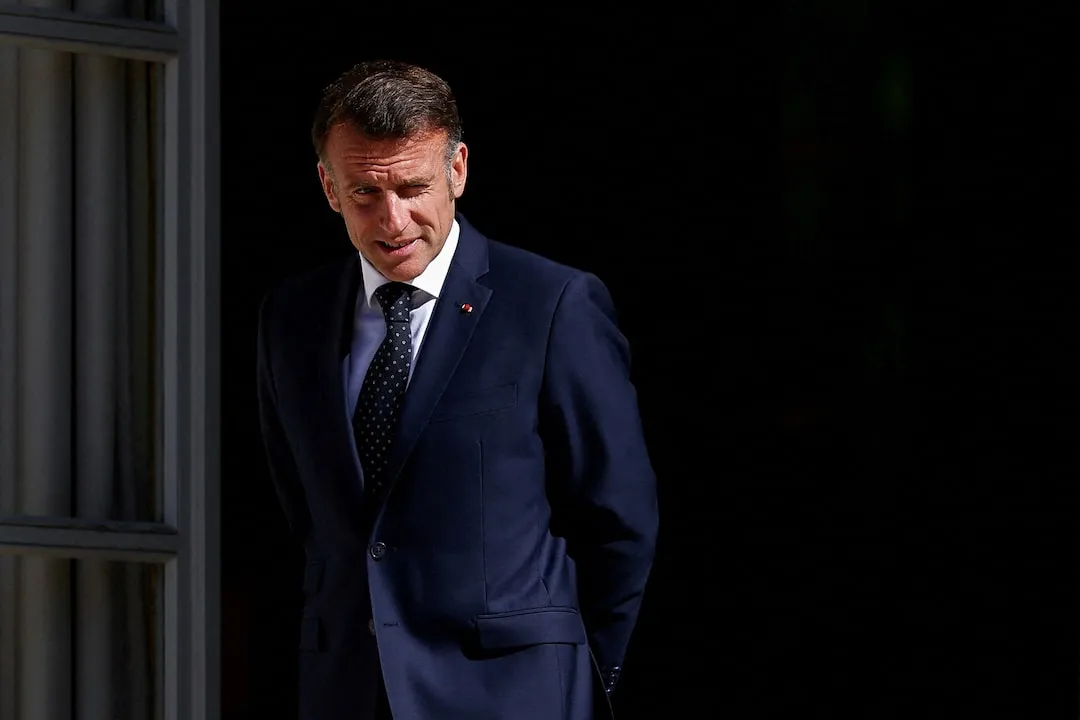
France and Britain are trying to show that Europe can still shape events around the Strait of Hormuz even after Washington and Tehran drove the military tempo of the wider crisis. On Friday, President Emmanuel Macron and Prime Minister Keir Starmer are co-chairing a videoconference of around 40 countries described as non-belligerent and potentially willing to contribute to a future defensive mission aimed at restoring freedom of navigation once security conditions allow it. The immediate point is not that European warships are about to sail into combat. It is that Paris and London want to organize the diplomatic and military scaffolding for a post-conflict security arrangement before the political space closes.
The formal line from both capitals is deliberately narrow. The Elysee and Downing Street have described the initiative as multilateral, purely defensive and focused on reopening a vital shipping corridor rather than joining one side of the war. France 24 reported that the talks center on how to restore freedom of navigation in the strait when security conditions allow it, while Politico said the mission would be limited to non-belligerent countries ready to help after the conflict phase eases. That wording matters because London and Paris are trying to distinguish their approach from the Trump administration’s coercive blockade strategy and from any operation that could be construed as an offensive coalition against Iran.France, UK host talks on securing Hormuzfrance24.com·SecondaryTo display this content from YouTube, you must enable advertisement tracking and audience measurement. One of your browser extensions seems to be blocking the video player from loading. To watch this content, you may need to disable it on this site. French President Emmanuel Macron and British Prime Minister Keir Starmer are chairing a meeting of around 40 so-called “non-belligerent” countries this Friday to discuss securing the Strait of Hormuz.
The background is what gives the meeting its urgency. Politico reported that U.S.-Israeli strikes on Iran in February triggered a wider regional conflict and brought navigation in the Strait of Hormuz close to a standstill, with energy prices pushed higher across world markets. France 24’s latest report described the route as subject to both an Iranian blockade and a retaliatory U.S. one, and framed Friday’s meeting as an effort by states that neither started nor joined the war to limit the economic damage. Those descriptions explain why even governments with no appetite for direct military alignment still want a seat in the room.France, UK host talks on securing Hormuzfrance24.com·SecondaryTo display this content from YouTube, you must enable advertisement tracking and audience measurement. One of your browser extensions seems to be blocking the video player from loading. To watch this content, you may need to disable it on this site. French President Emmanuel Macron and British Prime Minister Keir Starmer are chairing a meeting of around 40 so-called “non-belligerent” countries this Friday to discuss securing the Strait of Hormuz.
The European pitch also reflects a political balancing act. President Donald Trump has said the United States would blockade ships entering or leaving the strait to increase pressure on Iran after peace talks between Washington and Tehran failed to produce a deal, according to Politico. But the same report said France and Britain have signaled disapproval of that method, even while supporting the broader objective of reopening the waterway. In practical terms, Europe is arguing that securing commerce after a ceasefire is not the same thing as participating in the war that helped shut the corridor in the first place.France, UK host talks on securing Hormuzfrance24.com·SecondaryTo display this content from YouTube, you must enable advertisement tracking and audience measurement. One of your browser extensions seems to be blocking the video player from loading. To watch this content, you may need to disable it on this site. French President Emmanuel Macron and British Prime Minister Keir Starmer are chairing a meeting of around 40 so-called “non-belligerent” countries this Friday to discuss securing the Strait of Hormuz.
That distinction gives conservative and establishment European voices something they both want. For Atlanticist hawks, the talks let Britain and France demonstrate that they are serious about maritime order, strategic credibility and the protection of global trade routes. For more cautious officials, the defensive framing offers a way to show responsibility without handing Trump an automatic European endorsement for every escalatory measure adopted by Washington. The result is an initiative that is neither fully anti-American nor fully aligned with the current U.S. operational line.France, UK host talks on securing Hormuzfrance24.com·SecondaryTo display this content from YouTube, you must enable advertisement tracking and audience measurement. One of your browser extensions seems to be blocking the video player from loading. To watch this content, you may need to disable it on this site. French President Emmanuel Macron and British Prime Minister Keir Starmer are chairing a meeting of around 40 so-called “non-belligerent” countries this Friday to discuss securing the Strait of Hormuz.
There are also limits built into the project, and they are not minor. France 24 and Politico both indicate that the initiative is forward-looking rather than immediately executable, with the public emphasis on what can happen when security conditions allow it rather than what can be deployed today. That suggests Paris and London understand the basic reality: a mission that lacks broad political consent, or arrives before the fighting cools, could look less like maritime stabilization and more like a second-front intervention. In other words, the conference can create a framework faster than it can create usable conditions.
The diplomatic optics are nevertheless important. Macron and Starmer are not merely hosting another European consultation; they are trying to gather a wider coalition of countries that can plausibly say they were not belligerents and therefore might have more credibility in any future shipping-security arrangement. The emphasis on multilateralism is a recognition that the Strait of Hormuz is too economically important to be treated as a narrow regional problem and too politically sensitive to be managed by one Western capital alone. That is why the organizers appear to be selling the mission as an international public-good effort rather than a prestige exercise for Paris or London.France, UK host talks on securing Hormuzfrance24.com·SecondaryTo display this content from YouTube, you must enable advertisement tracking and audience measurement. One of your browser extensions seems to be blocking the video player from loading. To watch this content, you may need to disable it on this site. French President Emmanuel Macron and British Prime Minister Keir Starmer are chairing a meeting of around 40 so-called “non-belligerent” countries this Friday to discuss securing the Strait of Hormuz.
Skeptics, however, have obvious grounds for doubt. If the underlying U.S.-Iran confrontation remains unresolved, a defensive mission announced by Europe could easily end up waiting on decisions made elsewhere. If the conflict cools quickly, the mission may look prudent but late. If the conflict drags on, it may look serious on paper but detached from battlefield realities. And if Washington keeps pressing a harder blockade line while European capitals market a more limited maritime formula, the gap between U.S. and European policy could become part of the story rather than a background detail.France, UK host talks on securing Hormuzfrance24.com·SecondaryTo display this content from YouTube, you must enable advertisement tracking and audience measurement. One of your browser extensions seems to be blocking the video player from loading. To watch this content, you may need to disable it on this site. French President Emmanuel Macron and British Prime Minister Keir Starmer are chairing a meeting of around 40 so-called “non-belligerent” countries this Friday to discuss securing the Strait of Hormuz.
What happens next, then, matters more than the choreography of Friday’s call. If Paris and London can emerge with a credible list of willing contributors, a clear defensive mandate and visible diplomatic buy-in beyond Europe, they will have positioned themselves as practical organizers of a post-conflict shipping corridor. If the meeting produces only broad rhetoric, the initiative may still show Europe’s discomfort with Trump’s method, but not yet Europe’s ability to replace it with something operationally real. For now, the most important fact is that Britain and France have decided the argument over Hormuz should not be left entirely to Washington, Tehran or the combatants themselves.
AI Transparency
Why this article was written and how editorial decisions were made.
Why This Topic
This cluster is the strongest distinct publishable item left above the 6.0 threshold on the board. It is materially different from the recently published Iran war-powers and Roberts-Smith stories because it is not about a battlefield event or domestic vote but about whether France and Britain can organize a non-U.S., post-conflict maritime security framework around the world’s most sensitive energy chokepoint. The angle offers immediate geopolitical relevance, clear economic stakes, and natural tension between Washington’s coercive blockade posture and Europe’s narrower defensive framing.
Source Selection
The cluster has enough usable signal density for a balanced reported analysis. Politico provides the clearest policy framing on Macron, Starmer, the non-belligerent-country concept, the failed U.S.-Iran talks and Europe’s unease with Trump’s blockade line. France 24 adds the latest same-day framing, including the scale of the meeting and the emphasis on diplomatic and defensive measures. The sources are current, topically aligned and sufficient to support a long-form narrative without leaning on unsupported web-only claims.
Editorial Decisions
Headline and framing are descriptive rather than evaluative. Copy keeps a neutral-to-slightly-right-of-center posture by treating shipping security, state power, deterrence and economic order as legitimate concerns while also giving equal space to European caution about being drawn into war. The story avoids moralizing, treats official positions seriously, and foregrounds the policy split between a post-conflict defensive mission and the current U.S. blockade line.
Reader Ratings
About the Author
Sources
- 1.lemonde.frSecondary
- 2.france24.comSecondary
- 3.politico.euSecondary
- 4.france24.comSecondary
Editorial Reviews
1 approved · 0 rejectedPrevious Draft Feedback (1)
• depth_and_context scored 4/3 minimum: The article does a good job establishing the immediate context (the meeting) and the background (US-Israeli strikes, energy prices). To improve, it could add more specific details on the *legal* frameworks or international maritime law principles that underpin the 'freedom of navigation' argument, grounding the discussion more deeply in international relations theory. • narrative_structure scored 4/3 minimum: The structure is strong, moving logically from the immediate event (the meeting) to the background, the political maneuvering, and concluding with future implications. The lede is effective, though the nut graf could be slightly sharpened to more explicitly state the central tension: Europe's attempt to carve out a non-aligned role between US/Iran conflict dynamics. • perspective_diversity scored 4/3 minimum: The article successfully incorporates multiple viewpoints: the hosts (France/UK), the skeptics, the Atlanticist hawks, and the cautious officials. It could benefit from explicitly quoting or detailing the positions of a non-Western stakeholder (e.g., India, Japan, or a major Gulf state) to broaden the sense of international buy-in beyond just the US/EU axis. • analytical_value scored 5/3 minimum: The analysis is excellent, consistently interpreting the *meaning* behind the diplomatic actions—e.g., framing the initiative as a way to avoid being seen as an 'offensive coalition' or a way to signal responsibility without endorsing US policy. It moves far beyond mere reporting. • filler_and_redundancy scored 5/2 minimum: The article is highly efficient. It uses repetition strategically to reinforce key concepts (e.g., 'non-belligerent,' 'defensive mandate') without sounding redundant, maintaining a high information density throughout. • language_and_clarity scored 4/3 minimum: The writing is crisp and sophisticated, avoiding clichés and maintaining a high level of precision. To reach a 5, the author should review the use of acronyms and initialisms (e.g., 'US,' 'EU') in the first few paragraphs to ensure the most complex concepts are defined for a general audience, even if the tone is expert.
Discussion (0)
No comments yet.