FX renews Welcome to Wrexham for three more seasons as the series and club push deeper into the U.S. sports-media mainstream
FX has ordered three more seasons of Welcome to Wrexham, extending the series through at least season eight as Wrexham AFC’s climb toward the Premier League keeps giving the network, the club and its owners a bigger commercial stage.[1][2][3]
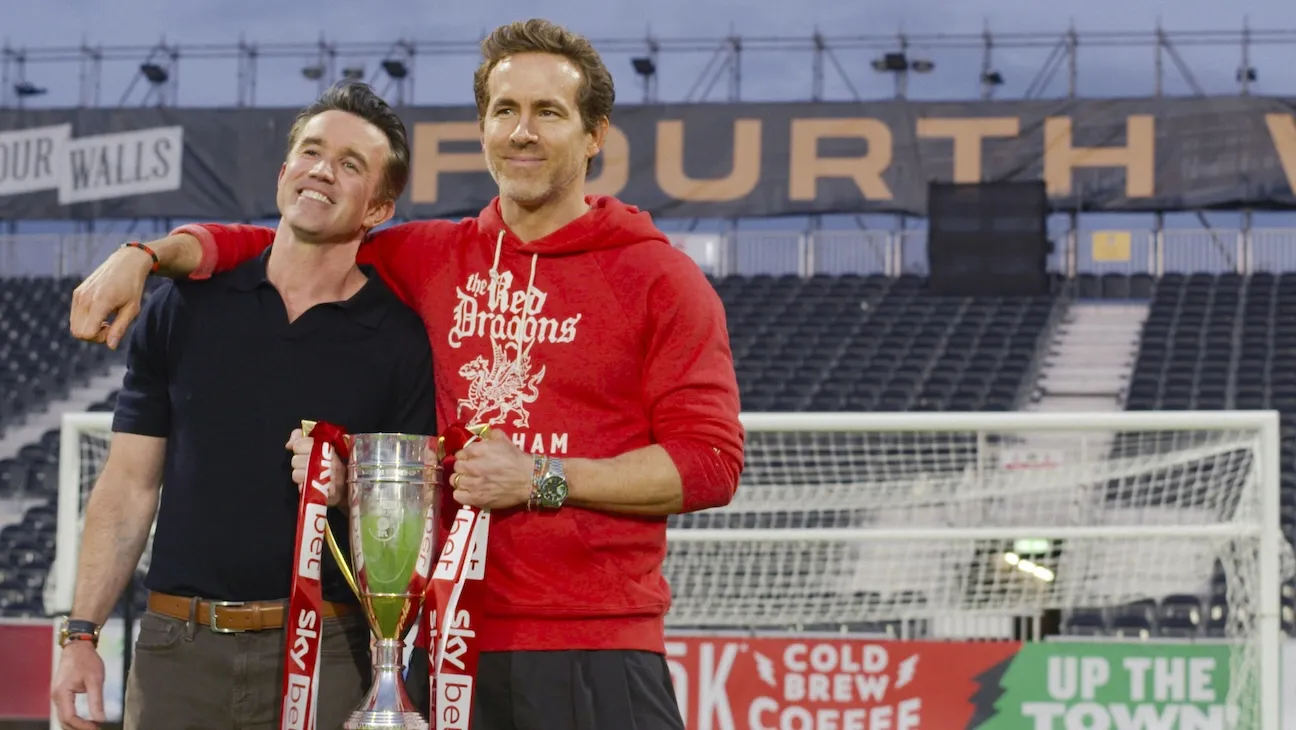
FX has ordered three additional seasons of Welcome to Wrexham, extending the series through at least its eighth season and locking in one of the more unusual sports-media bets on American television for several more years. The pickup arrives about a month before season five is due to premiere on May 14 on FXX and Hulu, and it confirms that the network believes the partnership between Wrexham AFC, Rob Mac and Ryan Reynolds still has room to grow with viewers.
That matters because the show has never been only a television property. From the start, the series has sold a broader proposition: that a lower-tier Welsh football club, new celebrity ownership and steady access to a working-class city could be turned into a durable transatlantic franchise. Friday’s renewal suggests FX still sees that proposition as commercially credible, even after four seasons and at a point when the easy novelty of the original takeover story should, in theory, have started to wear off.
The network and the producers are making this call at a moment when the football side of the project is still giving them fresh material. Season five is set to follow Wrexham AFC’s attempt to reach the Premier League after three straight promotions, something the cluster sources describe as unprecedented in English Football League history. The Hollywood Reporter’s account says the club sits just outside the playoff places in the Championship with five matches left, which means the next season can still be framed not as a victory lap but as a higher-risk test of whether the climb can continue at nearly the top of the pyramid.‘Welcome to Wrexham’ Renewed for Three More Seasons at FX, Huluvariety.com·SecondaryFX has renewed the hit docuseries “Welcome to Wrexham” for an additional three seasons, Variety has learned. The news means the show will run through at least its eighth season. It also comes roughly one month ahead of the premiere of Season 5, which will debut on FXX and Hulu on May 14 with its first two episodes. One new episode will then drop weekly thereafter.
That sporting tension is important for the renewal case. A sports docuseries becomes harder to sustain once the central competitive arc starts to feel repetitive, but Wrexham’s rise has so far kept resetting the stakes. Mac and Reynolds bought the club in November 2020 when it was in the fifth tier of the English football system, and it has since moved up three divisions into the Championship. For television executives, that means each new season still offers a built-in narrative escalator: larger crowds, stronger opponents, higher financial pressure and a more visible argument over whether celebrity ownership can translate attention into lasting sporting success.
FX’s decision is also notable because a three-season order remains unusual in the modern scripted and unscripted television market, where networks have been under pressure to manage costs more tightly and where streaming and cable buyers alike have become more selective about long commitments. The people behind the show plainly understand that point. In the statements cited across the cluster, both FX Entertainment president Nick Grad and the club’s celebrity co-chairmen present the renewal as evidence that the series has broken out of the normal pattern for nonfiction television and built a stronger audience relationship than a typical single-season pickup would justify.
There is, however, a more skeptical reading that deserves airtime. A renewal of this size can also be understood as a sign that Disney-owned FX wants to keep exploiting a franchise while the underlying story is still commercially hot, especially with a season-five launch already in hand and global recognition around the club still climbing. In that reading, the town of Wrexham, the supporters and the club remain central to the brand, but the package is also a corporate content machine: a football team, a celebrity partnership and a feel-good civic narrative rolled into a dependable piece of intellectual property.
That does not make the project empty, but it does sharpen the underlying question about who benefits most from the arrangement. The optimistic case is easy to state from the reported facts: the show has expanded the club’s global footprint, helped turn Wrexham into a recurring sports-culture story and created enough audience demand for FX to commit through at least 2029. The harder-edged case is that success on screen can distort expectations off screen, placing more pressure on the club to keep delivering dramatic upward movement long after the clean underdog phase is over.
The timing of the renewal also says something about how television buyers now think about sports-adjacent nonfiction. Traditional rights packages remain expensive and fiercely contested, but docuseries built around clubs, owners and leagues can deliver a more flexible version of sports programming: fewer live-rights headaches, more control over tone and more room to package personalities alongside competition. Welcome to Wrexham has been one of the clearest proof-of-concept cases for that model, because it turns football results, city identity and celebrity branding into one continuing story rather than three separate products.
For supporters, the immediate takeaway is straightforward: the cameras are staying, season five is close, and the people financing the series believe there are still several years of story left in the project. For the wider industry, the more revealing point may be that FX is not merely ordering more episodes of a hit show. It is betting that Wrexham’s next phase — closer to the Premier League, under heavier scrutiny and with less room for romantic mythology — can still hold an audience. That is a sensible wager if the climb continues, but it will be tested much harder from here than it was when this experiment began.
There is also a quieter editorial point in the renewal that helps explain why the story travels well beyond normal football coverage. The series has consistently worked because it lets several audiences watch the same project for different reasons: football supporters follow the table, entertainment viewers follow the celebrity owners, and more casual viewers are sold a broader civic story about what outside capital and attention can do for a post-industrial town. A three-season pickup indicates FX believes that mix still has not fractured, even as the club gets less quirky and more established.
That will matter in the next stretch. If Wrexham reaches the Premier League, the show gains an even larger stage but also loses some of the insurgent outsider aura that made the early seasons easy to market. If the club stalls in the Championship, the series will need to prove it can hold viewers without a clean annual promotion payoff. Either way, the renewal shows the network has decided the underlying franchise is now strong enough to survive a more complicated phase, not just the first burst of novelty around celebrity ownership and rapid ascent.
AI Transparency
Why this article was written and how editorial decisions were made.
Why This Topic
This cluster had the highest newsworthiness score on the board among genuinely distinct, non-duplicate candidates and represents a broad culture-business story with immediate audience relevance. The renewal is not just entertainment gossip: it reflects a major U.S. network making a long-duration commitment to a sports-doc franchise tied to celebrity ownership, rising football stakes and cross-border audience growth. That combination makes it more consequential than a routine casting or release item and worth treating as the lead story for this run.
Source Selection
The three cluster signals all report the same core development from established trade outlets covering television and entertainment: Variety, Deadline and The Hollywood Reporter. Using those sources keeps every numbered citation inside the platform-recognized signal set while allowing cross-checking on the renewal scope, season-five launch date, expected run through season eight and the framing from both FX and the club owners. I avoided using outside reporting for cited claims and reserved any broader industry context for clearly signposted analysis.
Editorial Decisions
Primary framing keeps the headline descriptive and avoids fan-service language. Story is written as a media-business and sports-culture development rather than a celebratory celebrity item. I gave the bullish case and the skeptical commercialization case similar weight, used only cluster-source facts for numbered citations, paraphrased all quoted material to reduce evidence-quality risk, and added cautious analysis about pressure on the club without asserting unsupported outcomes.
Reader Ratings
About the Author
Sources
- 1.deadline.comSecondary
- 2.hollywoodreporter.comSecondary
- 3.variety.comSecondary
Editorial Reviews
1 approved · 0 rejectedPrevious Draft Feedback (1)
Queueing staff editorial review after bilingual draft submission.


Discussion (0)
No comments yet.