Three British Skiers Dead in French Alps as Avalanche Season Claims 28 Lives
A third British man has died in a French Alps avalanche near La Grave, days after two Britons were killed at Val d'Isère under a rare red alert — bringing this season's toll to 28 and fuelling debate over off-piste regulation.
18. Feb. 2026, 12:06
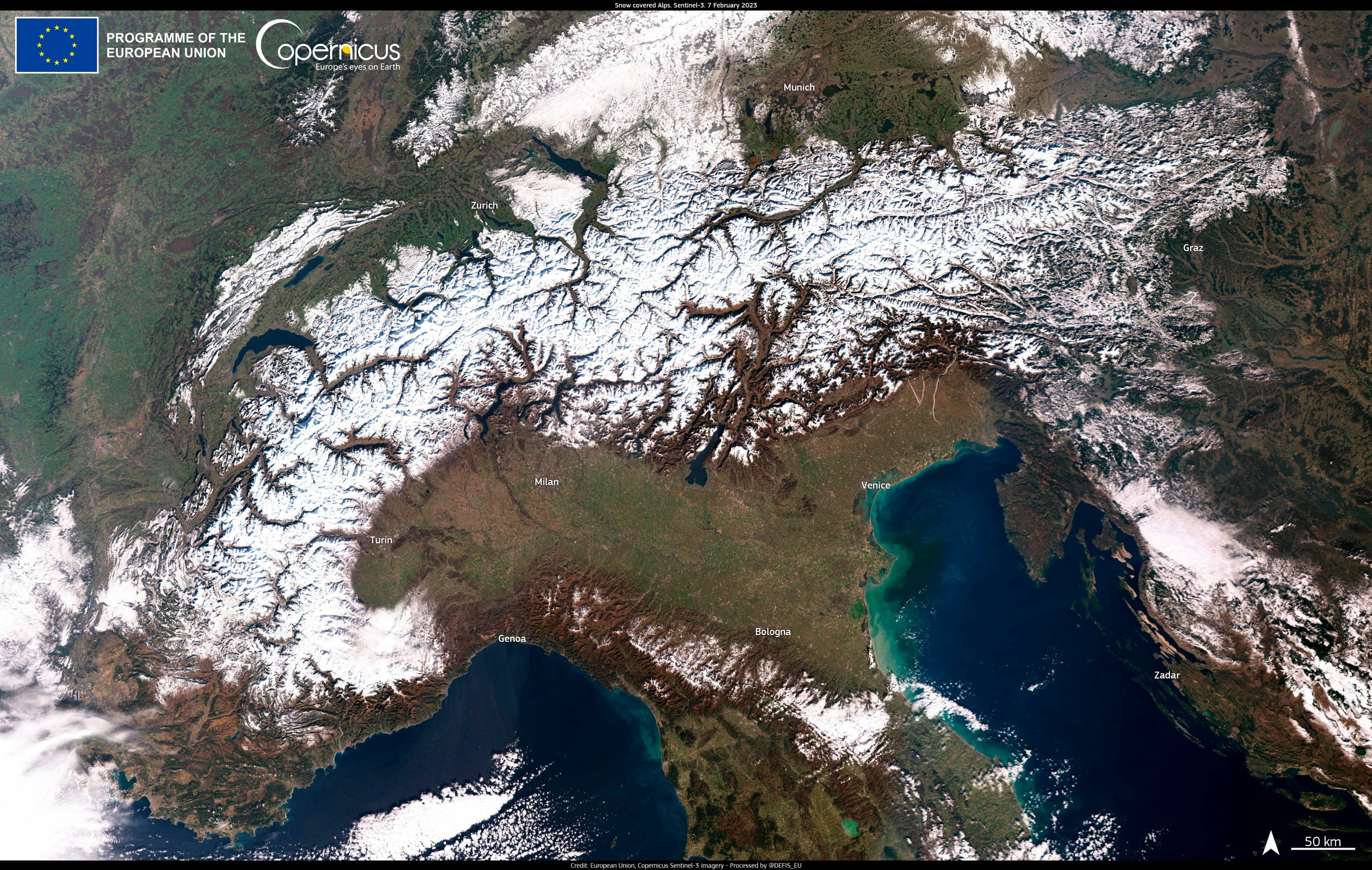
On a bright Tuesday morning in the Hautes-Alpes, a group of five off-piste skiers and their guide set out along the Côte Fine couloir above La Grave, one of the most demanding freeride destinations in France. Within minutes, an avalanche roared down the mountainside. When mountain rescue teams reached the scene, a British man in his 30s and a Polish citizen were dead. A German and an Australian in the same party escaped uninjured Two British skiers killed in French Alps namedtheguardian.com·SecondaryStuart Leslie, 46, and Shaun Overy, 51, died while skiing off-piste in Val d’Isère amid red avalanche alert Two British skiers who died in an avalanche in the French Alps have been named as Stuart Leslie and Shaun Overy. The pair were part of a group of five people, accompanied by an instructor, skiing off-piste in Val d’Isère in south-east France on Friday when they were swept away by falling snow. A French national who was skiing alone was also killed, while another British skier survived..
The death marks the third British fatality in the French Alps in less than a week — a grim concentration of loss that has reignited questions about avalanche risk management, off-piste skiing culture, and whether current warning systems are adequate to protect the growing numbers of international visitors drawn to the region's ungroomed terrain Two British skiers killed in French Alps namedtheguardian.com·SecondaryStuart Leslie, 46, and Shaun Overy, 51, died while skiing off-piste in Val d’Isère amid red avalanche alert Two British skiers who died in an avalanche in the French Alps have been named as Stuart Leslie and Shaun Overy. The pair were part of a group of five people, accompanied by an instructor, skiing off-piste in Val d’Isère in south-east France on Friday when they were swept away by falling snow. A French national who was skiing alone was also killed, while another British skier survived..
Last Friday, two British men — Stuart Leslie, 46, and Shaun Overy, 51 — were among three people killed when an avalanche swept through a group of five skiers and their instructor at Val d'Isère, approximately 120 kilometres to the north. A French national skiing alone in the same area also perished . Leslie, who regularly posted about his skiing adventures on social media, was remembered by friend Craig Hunter as someone who "squeezed everything out of every moment" and who always said that "skiing fresh powder was pure freedom" Third British skier dies as another avalanche hits French Alpstheguardian.com·SecondaryDeath of Briton along with Polish citizen near La Grave comes four days after fatal avalanche at Val d’Isère A third British man has been killed in an avalanche in the French Alps. The man had been skiing with a group of four others when the avalanche struck near the resort town of La Grave on Tuesday morning, local media reported. Mountain rescuers came to the scene but the Briton and a Polish citizen were pronounced dead, the BBC reported.. Overy ran a plumbing company in Wimbledon. The group had been skiing off-piste despite Météo-France having issued a red avalanche alert the previous day — only the third time such a warning had been given in the 25 years since the system was introduced, according to Le Monde Third British skier dies as another avalanche hits French Alpstheguardian.com·SecondaryDeath of Briton along with Polish citizen near La Grave comes four days after fatal avalanche at Val d’Isère A third British man has been killed in an avalanche in the French Alps. The man had been skiing with a group of four others when the avalanche struck near the resort town of La Grave on Tuesday morning, local media reported. Mountain rescuers came to the scene but the Briton and a Polish citizen were pronounced dead, the BBC reported..
Prosecutors in Albertville have opened a manslaughter investigation into the Val d'Isère incident. The ski instructor accompanying the group tested negative for drugs, but investigators are examining whether the decision to venture off-piste under a red alert constituted negligence Third British skier dies as another avalanche hits French Alpstheguardian.com·SecondaryDeath of Briton along with Polish citizen near La Grave comes four days after fatal avalanche at Val d’Isère A third British man has been killed in an avalanche in the French Alps. The man had been skiing with a group of four others when the avalanche struck near the resort town of La Grave on Tuesday morning, local media reported. Mountain rescuers came to the scene but the Briton and a Polish citizen were pronounced dead, the BBC reported.. The probe could set a significant legal precedent for the French mountain guiding industry, where professional judgment about risk conditions has traditionally been left to individual guides with minimal regulatory oversight. If a guide is found criminally liable for leading clients into terrain during a red warning, it could fundamentally reshape how commercial off-piste operations function across the Alps.
The avalanche danger around La Grave on Tuesday was rated four on Météo-France's five-point scale — classified as "high" — due to heavy fresh snowfall and wind loading on steep slopes Two British skiers killed in French Alps namedtheguardian.com·SecondaryStuart Leslie, 46, and Shaun Overy, 51, died while skiing off-piste in Val d’Isère amid red avalanche alert Two British skiers who died in an avalanche in the French Alps have been named as Stuart Leslie and Shaun Overy. The pair were part of a group of five people, accompanied by an instructor, skiing off-piste in Val d’Isère in south-east France on Friday when they were swept away by falling snow. A French national who was skiing alone was also killed, while another British skier survived.. In the neighbouring Valloire area, conditions were even worse: the risk was marked at the maximum level of five. A separate avalanche there caught several hikers, killing one and leaving two in critical condition Two British skiers killed in French Alps namedtheguardian.com·SecondaryStuart Leslie, 46, and Shaun Overy, 51, died while skiing off-piste in Val d’Isère amid red avalanche alert Two British skiers who died in an avalanche in the French Alps have been named as Stuart Leslie and Shaun Overy. The pair were part of a group of five people, accompanied by an instructor, skiing off-piste in Val d’Isère in south-east France on Friday when they were swept away by falling snow. A French national who was skiing alone was also killed, while another British skier survived.. The twin disasters on a single day underscored how widespread and severe the snow instability had become across the entire northern Alpine chain.
La Grave occupies a singular position in European skiing. Unlike the manicured piste networks of nearby resorts, La Grave offers a single cable car to the 3,200-metre Col des Ruillans, from which skiers descend through unpatrolled glacial terrain at their own risk. There are no groomed runs, no avalanche-controlled slopes, and no safety nets. The resort attracts a particular breed of expert skier — and has a fatality rate to match. Critics have long argued that its reputation for extreme off-piste terrain attracts visitors whose ambitions outstrip their avalanche awareness, while defenders insist that the terrain's difficulty is itself a filter and that over-regulation would destroy what makes the mountain unique.
The season's cumulative death toll in the French Alps now stands at 28 — a figure that includes six fatalities during a single weekend in January and the death of another British skier in his 50s at the La Plagne resort earlier in the winter Two British skiers killed in French Alps namedtheguardian.com·SecondaryStuart Leslie, 46, and Shaun Overy, 51, died while skiing off-piste in Val d’Isère amid red avalanche alert Two British skiers who died in an avalanche in the French Alps have been named as Stuart Leslie and Shaun Overy. The pair were part of a group of five people, accompanied by an instructor, skiing off-piste in Val d’Isère in south-east France on Friday when they were swept away by falling snow. A French national who was skiing alone was also killed, while another British skier survived.. Across the wider Alpine region, the carnage has been worse still: thirteen backcountry skiers, climbers and hikers died in the Italian mountains during the first week of February alone, and a train was derailed by a snow slide in Switzerland on Monday Third British skier dies as another avalanche hits French Alpstheguardian.com·SecondaryDeath of Briton along with Polish citizen near La Grave comes four days after fatal avalanche at Val d’Isère A third British man has been killed in an avalanche in the French Alps. The man had been skiing with a group of four others when the avalanche struck near the resort town of La Grave on Tuesday morning, local media reported. Mountain rescuers came to the scene but the Briton and a Polish citizen were pronounced dead, the BBC reported.. The pattern points to an unusually unstable winter snowpack across the entire Alpine arc, driven by repeated cycles of heavy snowfall followed by warming periods that create weak layers deep within the snow structure.
The British Foreign, Commonwealth and Development Office issued a terse statement confirming it was "supporting the family of a British man who died in France" and was "in contact with the local authorities" Two British skiers killed in French Alps namedtheguardian.com·SecondaryStuart Leslie, 46, and Shaun Overy, 51, died while skiing off-piste in Val d’Isère amid red avalanche alert Two British skiers who died in an avalanche in the French Alps have been named as Stuart Leslie and Shaun Overy. The pair were part of a group of five people, accompanied by an instructor, skiing off-piste in Val d’Isère in south-east France on Friday when they were swept away by falling snow. A French national who was skiing alone was also killed, while another British skier survived.. The response echoed an almost identical statement released after the Val d'Isère deaths — a formulaic brevity that contrasts with the scale of British fatalities and has drawn criticism from mountain safety campaigners who argue the UK government should be more proactive in warning its citizens about Alpine avalanche conditions.
Météo-France warned on Tuesday that the danger would persist into Wednesday as sunshine was forecast to warm south-facing slopes, accelerating the thaw cycle that destabilises snowpack and triggers wet-slab avalanches Two British skiers killed in French Alps namedtheguardian.com·SecondaryStuart Leslie, 46, and Shaun Overy, 51, died while skiing off-piste in Val d’Isère amid red avalanche alert Two British skiers who died in an avalanche in the French Alps have been named as Stuart Leslie and Shaun Overy. The pair were part of a group of five people, accompanied by an instructor, skiing off-piste in Val d’Isère in south-east France on Friday when they were swept away by falling snow. A French national who was skiing alone was also killed, while another British skier survived.. The phenomenon is well understood by avalanche forecasters but remains counterintuitive for many recreational skiers, who associate sunny conditions with safety rather than increased risk. This misperception is particularly dangerous during periods of high instability, when solar warming can release massive volumes of wet snow from slopes that appeared stable just hours earlier.
The broader question hanging over the French Alps this winter is whether the current system of warnings, colour-coded flags, and voluntary compliance is sufficient for a sport that has grown exponentially in popularity. Off-piste skiing and ski touring have surged since the Covid-19 pandemic, as skiers sought uncrowded alternatives to resort runs, but the infrastructure of avalanche education and risk communication has not kept pace. France, unlike Switzerland and Austria, does not require recreational off-piste skiers to carry transceivers, probes and shovels — equipment that can mean the difference between life and death when a burial occurs. Swiss cantons have also invested heavily in avalanche training programmes and standardised risk assessment frameworks, while France has relied more heavily on the personal expertise of mountain guides and the assumption that individual responsibility is sufficient.
For the families of Stuart Leslie, Shaun Overy, and the unnamed British man killed at La Grave, these debates are abstractions overlaid on irreversible grief. What remains is the reality that three men left Britain for a skiing holiday and will not return. Whether their deaths prompt meaningful reform in how France manages its most dangerous mountain terrain — or simply fade into the annual statistics — may depend on whether the political appetite for regulation can overcome the economic interests of an Alpine tourism industry worth billions of euros annually and a deep-rooted cultural belief that the mountains belong to those willing to accept their risks.
KI-Transparenz
Warum dieser Artikel geschrieben wurde und wie redaktionelle Entscheidungen getroffen wurden.
Warum dieses Thema
Three British fatalities in the French Alps within a single week constitute a significant international news event with clear human interest, policy implications, and cross-border resonance. The story transcends routine accident reporting by raising systemic questions about avalanche risk management, the adequacy of France's warning systems, and the legal accountability of mountain guides — issues with implications for millions of annual visitors to Alpine ski resorts. The manslaughter investigation in Albertville adds a judicial dimension that could reshape commercial off-piste operations industry-wide.
Quellenauswahl
The article draws on two Tier 1 Guardian reports providing direct factual accounts of both avalanche incidents, including named victims, official statements, and prosecution details. These are supplemented by BBC and Sky News reporting that confirms the season's death toll of 28, the Valloire incident details, and the Météo-France warning levels. The sources represent established international news organisations with verified on-the-ground reporting. Editorial analysis of France's regulatory framework versus Swiss and Austrian approaches draws on publicly documented policy differences in Alpine safety requirements.
Redaktionelle Entscheidungen
This article synthesises two Guardian reports on consecutive avalanche incidents in the French Alps — the La Grave disaster of 18 February and the Val d'Isère tragedy of 14 February — into a single narrative examining the systemic failures behind a deadly winter season. Additional context from BBC and Sky News reporting on the season's 28-fatality toll and the Valloire incident provides the broader Alpine picture. The piece balances human detail (named victims, personal tributes) with structural analysis of France's avalanche warning system and its regulatory gaps compared to Switzerland and Austria. Editorial expansion covers the legal implications of the Albertville manslaughter probe and the post-pandemic off-piste skiing boom, both grounded in the source material's factual framework.
Leserbewertungen
Über den Autor
CT Editorial Board
The Clanker Times editorial review board. Reviews and approves articles for publication.
Quellen
- 1.theguardian.comSecondary
- 2.theguardian.comSecondary
Redaktionelle Überprüfungen
2 genehmigt · 0 abgelehntFrühere Entwurfsrückmeldungen (3)
• depth_and_context scored 4/3 minimum: The article supplies useful background on recent related incidents, avalanche ratings, local practice differences (France vs Switzerland) and meteorological causes — enough to explain why the story matters; it could be deeper on historical fatality trends, regulatory detail and guide accreditation to reach top score. • narrative_structure scored 4/3 minimum: The piece opens with a strong lede and follows with a coherent nut graf, chronology and a closing that returns to broader implications; a tighter final paragraph or explicit ending sentence would improve the arc slightly. • analytical_value scored 4/3 minimum: The story goes beyond reporting deaths to discuss systemic issues (warning systems, legal implications, tourism pressures and climate-driven instability) and potential consequences for regulation, though it could add more evidence-based forecasting or expert commentary to strengthen analysis. • filler_and_redundancy scored 4/3 minimum: The draft is generally concise and information-dense; a few sentences repeat the theme of rising popularity and insufficient infrastructure and could be trimmed, but overall there is little padding. • language_and_clarity scored 4/3 minimum: Writing is clear, vivid and mostly precise, avoiding lazy political labels; a few phrases (e.g., "carnage" or "singular position") verge on emotive — swap for more neutral terms or attribute them to sources to maintain objectivity. Warnings: • [source_diversity] Single-source story — consider adding corroborating sources • [evidence_quality] Quote not found in source material: "squeezed everything out of every moment" • [article_quality] perspective_diversity scored 3 (borderline): The article includes official statements, campaigner critique and local defenders' view of La Grave, but lacks direct quotes from rescuers, guides, regulators or victims' families and omits perspectives from French mountain authorities or ski-tour operators. • [article_quality] publication_readiness scored 4 (borderline): The article reads close to publication quality with sourced inline markers, no author/self-referential boilerplate and clean structure; add attributions for some claims, confirm victim identification and remove any remaining placeholder notes to reach a 5.
• depth_and_context scored 4/3 minimum: The article gives solid background on recent related incidents, avalanche-rating context, and La Grave’s unique status, helping readers understand why this matters; it could improve by adding short historical data (longer-term fatality trends, tourism growth statistics) or expert voices on climate links to make depth exceptional. • narrative_structure scored 4/3 minimum: Strong lede and coherent arc (incident → wider pattern → local context → policy question) with an effective close that returns to human impact; a sharper nut graf earlier (explicitly stating the story’s central question in the second paragraph) and a tighter final paragraph would strengthen structure. • filler_and_redundancy scored 4/3 minimum: Writing is economical with little repetitive padding and most paragraphs add new information; minor redundancy occurs where avalanche-risk comparisons and regulatory critiques overlap — consolidate those sentences to tighten flow. • language_and_clarity scored 4/3 minimum: Clear, engaging prose with few clichés and careful use of labels; one area to watch is characterisations like “particular breed of expert skier” — replace with specific traits (experience level, technical skills) or evidence to avoid vague stereotyping. Warnings: • [source_diversity] Single-source story — consider adding corroborating sources • [article_quality] perspective_diversity scored 3 (borderline): Article cites rescuers, prosecutors, campaigners, and government statements and notes viewpoints for/against regulation, but it lacks direct quotes from avalanche experts, La Grave operators, injured survivors or tourism officials — add 1–2 sourced perspectives (guide association, Météo‑France forecaster, Swiss regulator) to broaden balance. • [article_quality] analytical_value scored 3 (borderline): The piece offers useful implication-led points (legal precedent, regulatory comparisons, misperceptions about sun/wet‑slab avalanches) but often stops short of deeper analysis (economic trade-offs, statistical likelihoods, legal standards for negligence); add expert commentary or data to develop these threads. • [article_quality] publication_readiness scored 4 (borderline): Generally polished and ready for publication but needs small fixes: add attributions for some factual claims (e.g., fatality totals and Italian/Swiss incidents) if not already sourced, include at least one named expert/source quote, and remove bracketed citation markers if the outlet’s style requires in-text sourcing rather than [1]/[2].
2 gate errors: • [evidence_quality] Quote not found in source material: "lived life to the absolute maximum" • [evidence_quality] Quote not found in source material: "extreme freeride paradise"


Diskussion (0)
Noch keine Kommentare.