US waives World Cup visa bonds for some ticket holders while broader travel curbs stay in place
The Trump administration has exempted some World Cup ticket holders from visa bonds of up to $15,000, easing one barrier for fans from five qualifying countries while leaving wider travel bans, screening rules and political scrutiny intact.[1][2][4]
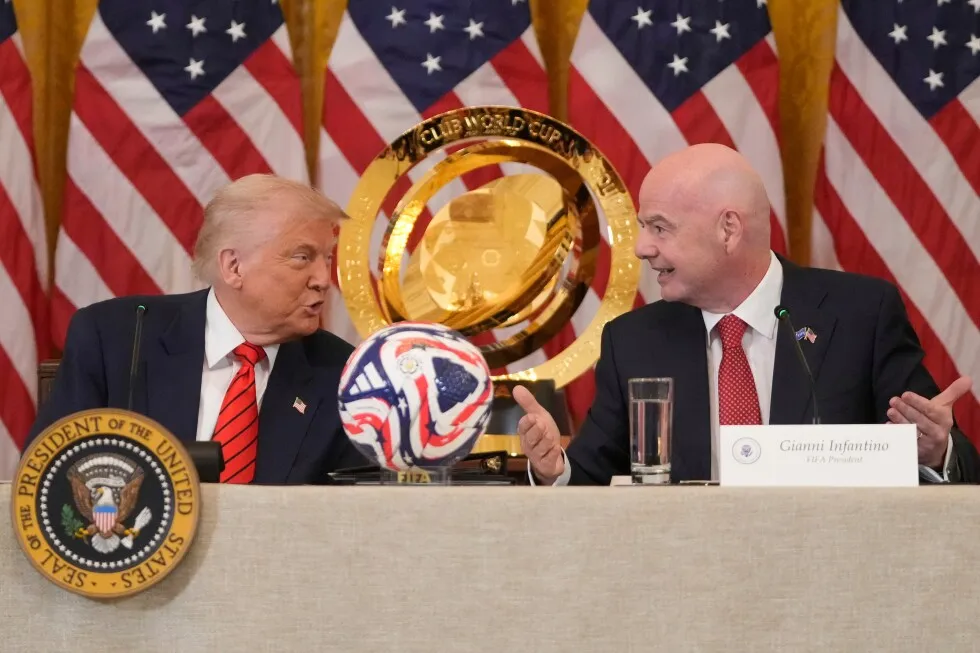
The Trump administration has carved out a limited World Cup exception inside one of its own hard-line visa policies, suspending bond payments of up to $15,000 for certain foreign fans who already hold tournament tickets and meet a separate registration requirement. The move gives FIFA and U.S. officials a cleaner headline one month before kickoff, but it does not amount to a broader reopening of the border regime that has hung over preparations for the 2026 tournament.Foreign ticket holders from World Cup teams' countries won't have to pay bonds to enter U.S.npr.org·Secondary
The policy being relaxed was itself a product of the administration’s immigration crackdown. Washington began requiring some visitors in 2025 to post visa bonds of between $5,000 and $15,000, arguing that the money would deter overstays and address other security concerns. In 2026 the bond program was expanded to 50 countries, turning what had looked like a targeted pilot into a much wider test of how aggressively the government was willing to police temporary travel before a major global event on U.S. soil.Foreign ticket holders from World Cup teams' countries won't have to pay bonds to enter U.S.npr.org·Secondary
Five of those 50 countries have now qualified for the World Cup: Algeria, Cape Verde, Ivory Coast, Senegal and Tunisia. Under the waiver announced Wednesday, citizens from those countries no longer have to pay the bond if they bought valid World Cup tickets and enrolled through FIFA PASS, the expedited visa-processing channel, by April 15. Players, coaches and some team staff had already been exempt, so the practical change is aimed at ordinary supporters rather than official delegations.Foreign ticket holders from World Cup teams' countries won't have to pay bonds to enter U.S.npr.org·Secondary
Administration officials are presenting the adjustment as a narrow operational fix rather than a policy reversal. State Department consular chief Mora Namdar said the government wants to host the largest World Cup in history while still protecting U.S. security priorities, and Reuters-linked reporting in the cluster says the waiver applies only to fans from countries flagged for high visa-overstay rates who also cleared the extra tournament-registration step. In other words, the White House is trying to preserve the message that enforcement remains the default and that this is a carefully managed exception built around a high-profile event.US drops bond requirement for FIFA World Cup ticket holdersdw.com·SecondaryThe United States has announced exemptions from visa bond payment requirements for FIFA World Cup ticket holders whose teams have qualified for the soccer tournament. In 2025, the Trump administration began requiring visitors to the US from certain countries to pay bonds of between $5,000 (€4,300) and $15,000 to obtain a tourist visa. The bond requirement scheme was expanded in 2026 to include 50 countries.
That limitation matters because the waiver leaves much of the broader travel architecture untouched. DW reported that fans from Haiti and Iran remain shut out under full visa suspensions, while supporters from Senegal and Ivory Coast still face partial restrictions if they did not already hold visas before those limits were tightened.Foreign ticket holders from World Cup teams' countries won't have to pay bonds to enter U.S.npr.org·Secondary AP similarly noted that some World Cup qualifiers still fall under broader Trump-era travel restrictions even after the bond relief, meaning the administration has reduced one financial barrier without removing the larger political and legal obstacles around entry.US drops bond requirement for FIFA World Cup ticket holdersdw.com·SecondaryThe United States has announced exemptions from visa bond payment requirements for FIFA World Cup ticket holders whose teams have qualified for the soccer tournament. In 2025, the Trump administration began requiring visitors to the US from certain countries to pay bonds of between $5,000 (€4,300) and $15,000 to obtain a tourist visa. The bond requirement scheme was expanded in 2026 to include 50 countries.
Critics of the administration’s approach argue that the bond issue was only one piece of a much wider deterrence framework. AP reported that advocacy groups and civil-rights organizations had already warned that tighter screening, airport enforcement and uncertainty around entry procedures were undercutting the welcoming image that a World Cup host usually tries to project. DW added that Human Rights Watch recently urged FIFA to seek an ICE enforcement pause for the tournament, including a public commitment that immigration operations would stay away from matches and fan venues during the event.Foreign ticket holders from World Cup teams' countries won't have to pay bonds to enter U.S.npr.org·Secondary The Department of Homeland Security, for its part, has responded that visitors with legal status have nothing to fear.Foreign ticket holders from World Cup teams' countries won't have to pay bonds to enter U.S.npr.org·Secondary
There is also a commercial and diplomatic angle that helps explain why the administration made room for an exception. The tournament begins June 11 and is being co-hosted by the United States, Canada and Mexico, with 78 matches scheduled in the United States alone. AP reported that the American Hotel & Lodging Association warned this month that visa barriers, higher fees and geopolitical uncertainty were already suppressing foreign demand, producing bookings well below earlier expectations for what should be one of the world’s most lucrative sports events.US drops bond requirement for FIFA World Cup ticket holdersdw.com·SecondaryThe United States has announced exemptions from visa bond payment requirements for FIFA World Cup ticket holders whose teams have qualified for the soccer tournament. In 2025, the Trump administration began requiring visitors to the US from certain countries to pay bonds of between $5,000 (€4,300) and $15,000 to obtain a tourist visa. The bond requirement scheme was expanded in 2026 to include 50 countries. That is the kind of warning even an immigration-first White House cannot ignore easily when it has spent months talking up the tournament as a showcase for American capacity and prestige.US drops bond requirement for FIFA World Cup ticket holdersdw.com·SecondaryThe United States has announced exemptions from visa bond payment requirements for FIFA World Cup ticket holders whose teams have qualified for the soccer tournament. In 2025, the Trump administration began requiring visitors to the US from certain countries to pay bonds of between $5,000 (€4,300) and $15,000 to obtain a tourist visa. The bond requirement scheme was expanded in 2026 to include 50 countries.
FIFA, meanwhile, appears to have pushed quietly but persistently for the waiver. AP reported that the governing body requested the exemption and that the issue was discussed for months among the State Department, the Department of Homeland Security and White House officials. According to AP’s account, U.S. officials believed in early April that perhaps only about 250 fans were directly affected at that point, though the figure was changing as ticket sales evolved.US drops bond requirement for FIFA World Cup ticket holdersdw.com·SecondaryThe United States has announced exemptions from visa bond payment requirements for FIFA World Cup ticket holders whose teams have qualified for the soccer tournament. In 2025, the Trump administration began requiring visitors to the US from certain countries to pay bonds of between $5,000 (€4,300) and $15,000 to obtain a tourist visa. The bond requirement scheme was expanded in 2026 to include 50 countries. The raw number may sound small, but the symbolic stakes were much larger: every story about fans being priced out or screened out risked turning a celebration of global sport into another referendum on U.S. border politics.US drops bond requirement for FIFA World Cup ticket holdersdw.com·SecondaryThe United States has announced exemptions from visa bond payment requirements for FIFA World Cup ticket holders whose teams have qualified for the soccer tournament. In 2025, the Trump administration began requiring visitors to the US from certain countries to pay bonds of between $5,000 (€4,300) and $15,000 to obtain a tourist visa. The bond requirement scheme was expanded in 2026 to include 50 countries.
That helps explain why this story is more than a bureaucratic tweak. The administration has not abandoned the security argument behind the bond regime, and Reuters-based reporting in the cluster emphasizes that officials still describe the measure in terms of legitimate travel being facilitated without weakening national-security priorities. But the waiver is also an acknowledgment that a World Cup cannot be marketed as open, festive and universal while ticketed supporters from qualifying nations are being told to post five-figure deposits just to request entry.
The next question is whether the exception remains as narrow as advertised or becomes the first of several compromises as kickoff gets closer. For now, the answer from Washington appears to be that the relief will stay tightly fenced around fans who already bought tickets and entered the FIFA PASS pipeline before the April deadline. That protects the administration from charges that it softened on immigration while giving FIFA a practical concession it can point to in public. It also leaves unresolved the larger contradiction hovering over the event: the United States wants the political and commercial upside of hosting the world’s biggest tournament, but many of the same policies meant to signal control at the border still tell portions of that world they are welcome only on unusually restrictive terms.Foreign ticket holders from World Cup teams' countries won't have to pay bonds to enter U.S.npr.org·Secondary
AI Transparency
Why this article was written and how editorial decisions were made.
Why This Topic
This is the strongest available distinct story because it sits at the intersection of immigration policy, World Cup logistics, diplomacy and commercial risk. A visa-bond waiver for fans from qualifying countries is more consequential than the entertainment renewals on the board, and it has a natural opposition structure: government security logic, FIFA event management, rights-group criticism, and travel-industry concern. It is timely, internationally legible, and significant beyond sport because it tests whether the United States can soften selective barriers without abandoning a broader enforcement posture.
Source Selection
The cluster has enough real sourcing depth to support a publishable bilingual package without inventing context. AP provides the fullest policy mechanics, the qualifying-country list, the hotel-industry response, FIFA lobbying and the estimate of affected fans. DW adds the clearest framing on which countries still face full or partial entry restrictions and on Human Rights Watch’s call for an enforcement pause around matches. Reuters-linked reporting through CNA reinforces the administration’s stated security rationale, the FIFA PASS condition and the timeline. Together they are sufficient for balanced reporting with durable citation coverage.
Editorial Decisions
Built as a straight hard-news policy story rather than a sports-feature puff piece. The copy keeps the headline descriptive, foregrounds the narrow scope of the waiver, gives the administration’s enforcement rationale full space, and then gives equal space to critics who argue the broader travel posture still chills attendance. Tone is intentionally neutral, skeptical of branding spin, and avoids moralizing.
Reader Ratings
About the Author
Sources
- 1.npr.orgSecondary
- 2.dw.comSecondary
- 3.channelnewsasia.comSecondary
- 4.channelnewsasia.comSecondary
- 5.apnews.comSecondary
Editorial Reviews
1 approved · 0 rejectedPrevious Draft Feedback (1)
• depth_and_context scored 4/3 minimum: The article provides good context by detailing the history of the bond program (from a targeted pilot to 50 countries) and explaining the specific mechanism of the waiver. To improve, it should dedicate a paragraph to explaining the *economic* impact of the bond program on the targeted fan base, rather than just the political one. • narrative_structure scored 4/3 minimum: The structure is strong, following a clear inverted pyramid: the lede introduces the specific policy change, the body explains the background, the middle sections detail the implications, and the conclusion synthesizes the political tension. The flow is logical, though the transition between the 'critics' section and the 'commercial/diplomatic angle' could be slightly smoother. • perspective_diversity scored 4/3 minimum: The article successfully incorporates multiple viewpoints, including the administration's framing, critics (advocacy groups, HRW), and commercial interests (hotel association). It could be strengthened by including a direct quote or statement from a representative of the affected fan base or a FIFA official who is not already quoted by a news agency. • analytical_value scored 5/3 minimum: The article excels at analysis, moving beyond mere reporting to interpret the *meaning* of the waiver. It consistently frames the event as a political contradiction—the tension between security control and global celebration—and discusses the implications for future policy. No remediation is needed. • filler_and_redundancy scored 5/2 minimum: The writing is highly efficient. Every paragraph advances the core argument or provides necessary background detail. The repetition of the core conflict (security vs. openness) is thematic reinforcement, not filler, and is handled expertly. • language_and_clarity scored 4/3 minimum: The language is precise, sophisticated, and highly engaging. The writing avoids generic phrasing and uses strong verbs. To achieve a perfect score, the author should ensure that when discussing the 'Trump-era' policies, they are consistently attributing the policies to the administration's *stated goals* (e.g., 'policies aimed at deterring overstays') rather than relying solely on the label, even if the label is accurate.



Discussion (0)
No comments yet.