Rubio Says U.S. Expects Iran War to End Within Weeks as Conflict Risks Spread Across Region
Secretary of State Marco Rubio says Washington expects the Iran campaign to end within weeks and without U.S. ground combat, but regional spillover, shipping threats and conflicting diplomatic signals suggest the conflict could still widen.
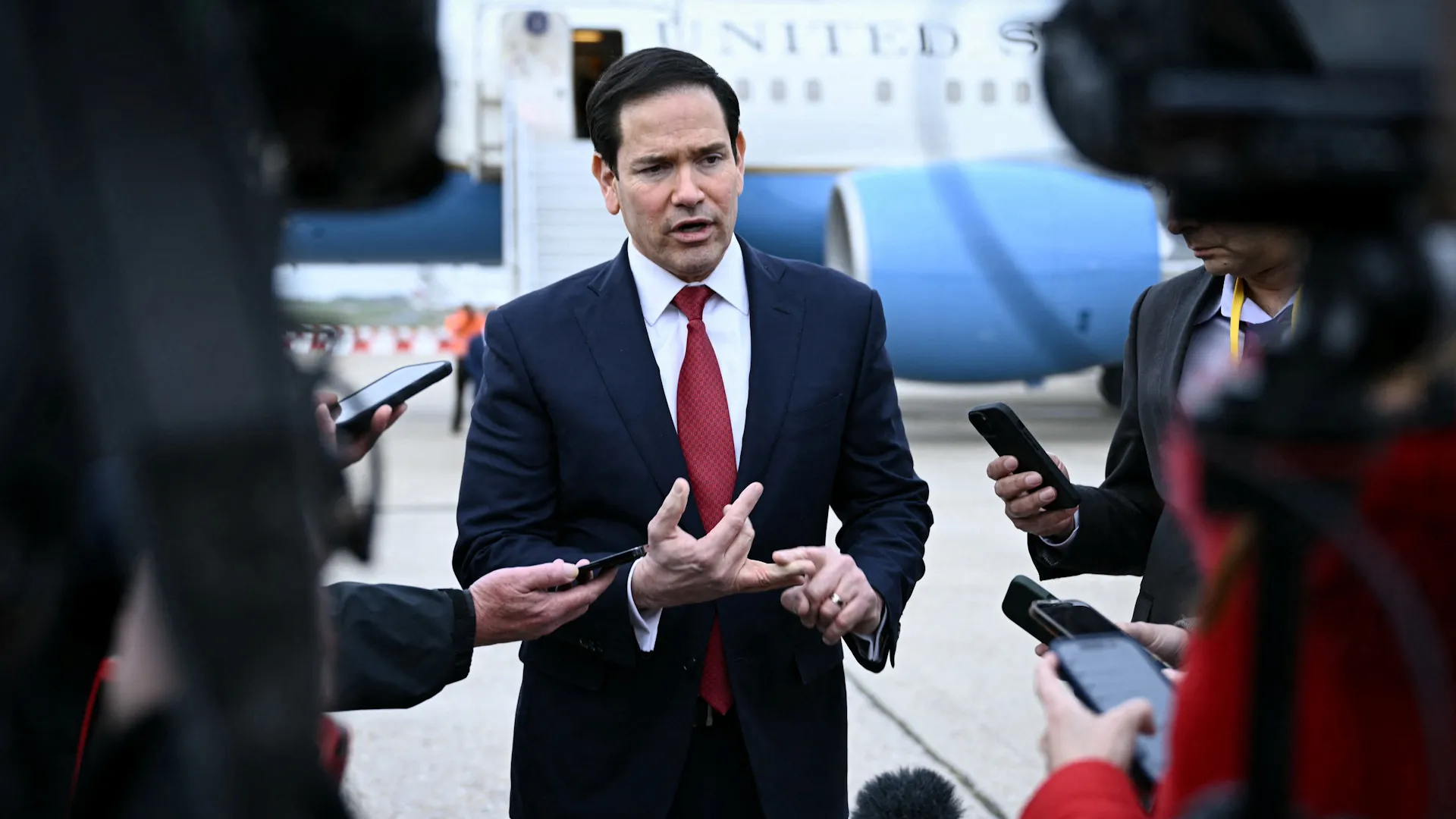
By Saturday morning, the American line on the Iran war had become clearer in one respect and murkier in several others. Secretary of State Marco Rubio said after meeting G7 foreign ministers in France that Washington expects the operation against Iran to conclude in weeks rather than months, and that the United States believes it can meet its objectives without relying on ground combat forces. That is a strikingly compressed timeline for a war that has already spread beyond direct U.S.-Israeli strikes on Iran into attacks touching Saudi Arabia, Lebanon, Israel and the shipping lanes around the Strait of Hormuz. It also sets up the central question now hanging over the conflict: whether official optimism about a short campaign reflects real control over events, or simply a political need to project control while the battlefield keeps generating new risks.U.S. expects Iran operation to end in weeks, ground troops not needed, Rubio saysinvesting.com·Secondary
Rubio’s message was meant to reassure several audiences at once. For Americans wary of another open-ended Middle East war, he signaled that Washington does not expect a long occupation-style campaign and does not presently see ground troops as necessary to achieve its aims. For allies and markets, he suggested the United States is on or ahead of schedule in degrading Iran’s military capabilities. For adversaries, the message was that pressure will continue until Washington decides its objectives have been met. Yet even in the same reporting, that confidence sat beside evidence that the Pentagon is still moving additional Marines and elite airborne forces into the region to preserve what officials describe as contingency options if the war changes character.U.S. expects Iran operation to end in weeks, ground troops not needed, Rubio saysinvesting.com·Secondary
That contradiction matters because it is not trivial. If a conflict can be wrapped up quickly with air and missile power alone, the visible expansion of regional force posture should in theory be limited. Instead, the public picture is one of a government insisting it does not need ground troops while also building the capacity to use them if the situation deteriorates. France24 reported that U.S. deployments were raising concern that the war could slide toward a more prolonged ground phase, even as Rubio argued that Washington can avoid that outcome. The Guardian likewise described U.S. military preparations tied to possible efforts to reopen the Strait of Hormuz should Iran keep constricting passage there. In plain terms, officials are selling a short war while quietly preparing for a harder one.U.S. expects Iran operation to end in weeks, ground troops not needed, Rubio saysinvesting.com·Secondary
The regional picture gives good reason for that caution. After Rubio spoke, Israel said it detected a missile launched from Yemen, the first such attack since the Iran war began, heightening concern that the Iran-aligned Houthis could deepen their involvement. Houthi participation would matter not just because it broadens the map of the war, but because the group has already shown it can threaten shipping routes around the Red Sea and the Arabian Peninsula. At the same time, reports cited by The Guardian said an Iranian attack on Prince Sultan airbase in Saudi Arabia wounded American personnel and damaged aircraft, underscoring that U.S. exposure in the region extends well beyond Israel itself.Rubio: US expects Iran war to end in ‘weeks, not months’aljazeera.com·SecondaryRubio: US expects Iran war to end in ‘weeks, not months’ US Secretary of State Marco Rubio said the US expects its military operation in Iran to conclude “in a matter of weeks, not months”, adding that progress is ahead of schedule and can be achieved without deploying ground troops. Meanwhile, France24 reported continued Iranian attacks on Israeli and regional targets and noted that the conflict was already causing severe disruption to trade in energy and other commodities.U.S. expects Iran operation to end in weeks, ground troops not needed, Rubio saysinvesting.com·Secondary
The shipping question may prove even more consequential than the headline military exchanges. Rubio said keeping the Strait of Hormuz open will remain an immediate challenge even after U.S. military objectives are met, and both France24 and The Guardian described concern that Iran could continue to interfere with passage or impose de facto costs on shipping through the waterway. The Guardian reported that Iran’s Revolutionary Guards said they had turned back three ships and warned that shipping linked to allies of Israel and the United States could be denied passage. That matters because roughly a fifth of the world’s oil normally moves through Hormuz, making even partial disruption a global economic problem rather than a local naval dispute.Rubio: US expects Iran war to end in ‘weeks, not months’aljazeera.com·SecondaryRubio: US expects Iran war to end in ‘weeks, not months’ US Secretary of State Marco Rubio said the US expects its military operation in Iran to conclude “in a matter of weeks, not months”, adding that progress is ahead of schedule and can be achieved without deploying ground troops. The G7 statement calling for an immediate halt to attacks on civilians and civilian infrastructure therefore carried an obvious humanitarian purpose, but it also reflected anxiety that the war is beginning to threaten the plumbing of the world economy.U.S. expects Iran operation to end in weeks, ground troops not needed, Rubio saysinvesting.com·Secondary
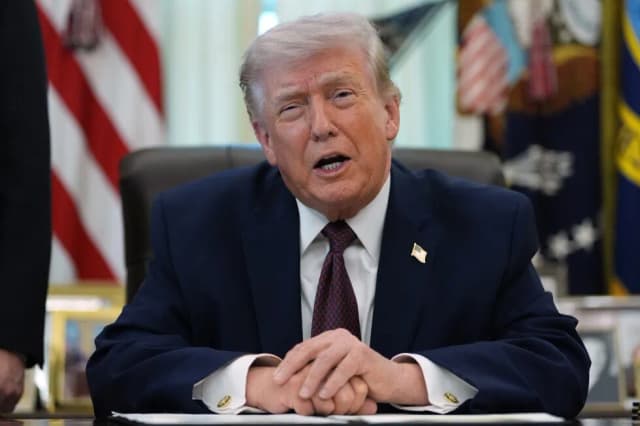
Diplomacy, meanwhile, remains a fog of claims, denials and hedged expectations. Rubio and U.S. envoy Steve Witkoff signaled that contacts or meetings with Iran could still occur soon, and President Donald Trump has continued to suggest a diplomatic opening remains possible. Iran, however, has denied that negotiations are underway in the way Washington has publicly implied, and officials cited in the reporting described the continuation of strikes during talk of diplomacy as intolerable. That disconnect is more than messaging theater. It suggests Washington wants the leverage of continued military pressure while still keeping the door open to a negotiated outcome, whereas Tehran appears intent on showing it will not negotiate from what it regards as a position of humiliation. A ceasefire or interim arrangement is therefore imaginable, but the public record as of Saturday does not show a stable diplomatic channel with enough trust to guarantee one.U.S. expects Iran operation to end in weeks, ground troops not needed, Rubio saysinvesting.com·Secondary
Another reason to treat the optimistic timetable cautiously is that the reported military damage to Iran, while serious, does not read like total incapacitation. France24 and The Guardian both cited reporting that the United States could confirm the destruction of only about a third of Iran’s missile arsenal, with a similar rough assessment for drone capabilities in some intelligence reporting. The Guardian also said Iranian attacks were continuing at a roughly consistent daily pace, which outside analysts read as a sign that Iran still retains meaningful strike capacity. Israel, for its part, has continued hitting missile sites, storage facilities and elements of Iran’s nuclear infrastructure, including sites tied to heavy water and yellowcake uranium processing, while Iranian authorities have said there were no contamination risks from the latest strikes. None of that looks like a regime that has lost the ability to hurt its enemies, even if it has plainly taken damage.U.S. expects Iran operation to end in weeks, ground troops not needed, Rubio saysinvesting.com·Secondary
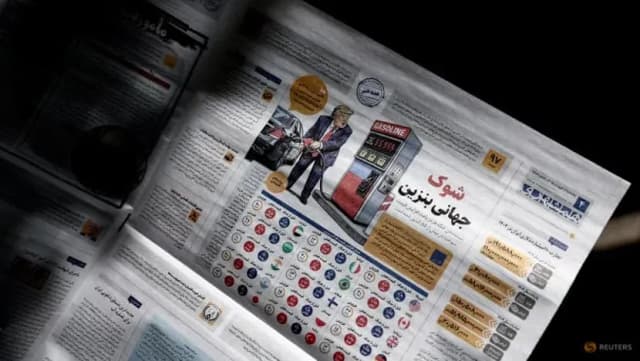
There is also a political story inside Rubio’s formulation. Saying the war should last weeks rather than months is a strategic message, but it is also a domestic one. France24 noted that Trump is under pressure to wind down what it described as an unpopular war, while The Guardian tied the conflict to rising energy prices, sliding markets and fuel costs that could hurt the White House politically. When administrations start offering precise-looking time horizons in the middle of a war, skeptics usually ask whether those horizons are based on military certainty or political necessity. In this case, the answer may be both. Washington may genuinely believe it has narrowed Iran’s options, but it also plainly has an interest in convincing voters, allies and markets that this campaign will not become the next endless regional entanglement.U.S. expects Iran operation to end in weeks, ground troops not needed, Rubio saysinvesting.com·Secondary
The conservative critique of official war messaging has long been that governments often promise limited missions while leaving themselves broad discretion to escalate later. This case contains enough evidence to keep that critique alive. The administration is talking about limited duration, no need for ground combat, and possible diplomacy. At the same time, it is reinforcing the region, keeping military options open, warning about Hormuz, and facing a battlefield that now touches Yemen, Lebanon, Gulf bases and vital energy routes. Supporters of the campaign will argue that this is prudent deterrence and that visible strength is what makes a shorter war possible. Critics will counter that such logic often becomes a staircase of incremental escalation. Both views deserve airtime because both are grounded in the same facts now on the table.U.S. expects Iran operation to end in weeks, ground troops not needed, Rubio saysinvesting.com·Secondary
What happens next will likely turn on three tests. The first is whether Iran’s remaining missile and drone capacity falls quickly enough to make Rubio’s timetable credible. The second is whether the conflict remains geographically containable, especially after the Yemen launch and the continued tension around Gulf bases and Lebanese territory. The third is whether a real negotiating track emerges rather than a public exchange of offers, denials and deadlines. For now, the administration’s position is that it can finish the job fast and avoid a ground war. The harder reality is that wars in the Middle East rarely obey neat calendars, and the evidence available on Saturday still pointed to a conflict that could either narrow abruptly or broaden with very little warning.U.S. expects Iran operation to end in weeks, ground troops not needed, Rubio saysinvesting.com·Secondary
AI Transparency
Why this article was written and how editorial decisions were made.
Why This Topic
This is the strongest publishable cluster on the board after deduplication. Rubio’s claim that the U.S. can wrap the Iran war in weeks without ground troops is inherently high-stakes because it touches war duration, escalation risk, diplomacy, energy markets and allied security at once. It is materially different from our recent technology and business publishes and has immediate geopolitical relevance.
Source Selection
The cluster contains three usable, mutually reinforcing signals from Al Jazeera, France24 and The Guardian. France24 and The Guardian provide enough raw-content depth for chronology, official positions, regional spillover and shipping implications, while Al Jazeera cleanly anchors Rubio’s core timeline claim. I avoided importing unsupported stats from outside the cluster so the evidence-quality gate can validate every substantive claim against available signal text.
Editorial Decisions
Neutral, descriptive framing. Lead with Rubio’s timetable but keep equal weight on the case for official optimism and the case for skepticism. Give government positions, market and shipping implications, and broader regional-spillover concerns without moralizing. Avoid direct quotes beyond paraphrased reporting, and avoid left-coded framing shortcuts.
Reader Ratings
About the Author
Sources
- 1.france24.comSecondary
- 2.investing.comSecondary
- 3.aljazeera.comSecondary
- 4.theguardian.comSecondary
Editorial Reviews
1 approved · 0 rejectedPrevious Draft Feedback (3)
Warnings: • [citation_coverage] Gate check failed: Service request failed. Status: 502 (Bad Gateway) • [article_quality] Gate check failed: Service request failed. Status: 502 (Bad Gateway)
2 gate errors: • [structure] Article must not contain a 'Sources' or 'References' section. Sources are linked structurally from the cluster's signals and rendered separately by the frontend. • [publication_readiness] Article contains a Sources/References/Bibliography section — sources are handled structurally by the platform. Remove the section.
2 gate errors: • [structure] Article must not contain a 'Sources' or 'References' section. Sources are linked structurally from the cluster's signals and rendered separately by the frontend. • [publication_readiness] Article contains a Sources/References/Bibliography section — sources are handled structurally by the platform. Remove the section.

Discussion (0)
No comments yet.