South Carolina court orders new Alex Murdaugh murder trial after throwing out convictions
South Carolina's highest court overturned Alex Murdaugh's murder convictions and ordered a new trial, saying jury interference by a court clerk and prejudicial trial rulings denied him a fair proceeding, even as prosecutors vowed to try the case again.[1][2][4]
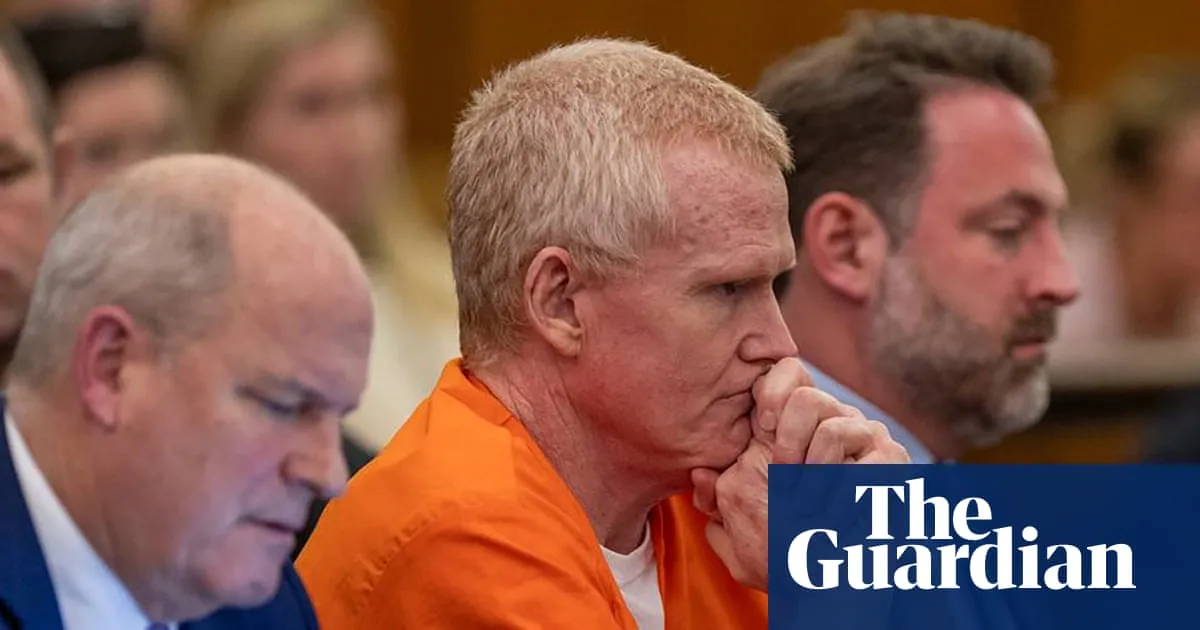
By midday in Columbia, one of the most watched American murder cases of the past decade had been thrown back into legal uncertainty. The South Carolina Supreme Court overturned Alex Murdaugh's 2023 murder convictions on Wednesday and ordered a new trial in the 2021 shooting deaths of his wife Maggie and son Paul, reopening a case that prosecutors had once presented as a definitive fall of a once-powerful local legal dynasty.
The ruling did not rest on a new theory about who killed Maggie and Paul, nor did it say Murdaugh had been cleared. Instead, the justices said the original proceeding had been compromised by outside influence on jurors and by trial rulings that went beyond what a fair murder prosecution should have included, making the central issue not innocence or guilt in the abstract but whether the state obtained its verdict under conditions the court could still defend.
According to the court's account as reported across several outlets, the justices concluded that former Colleton County clerk Becky Hill improperly affected jurors during the trial. The court said Hill attacked Murdaugh's credibility, encouraged jurors to watch his demeanor with suspicion and, in the view of the justices, helped tip the scales against the presumption of innocence that a defendant is supposed to carry into deliberations. The ruling also faulted the trial judge for allowing jurors to hear evidence about Murdaugh's financial crimes that his lawyers argued had no direct connection to the killings and served mainly to make him look like a broadly rotten man before the jury decided the murder counts.South Carolina Supreme Court overturns Alex Murdaugh’s murder convictions in deaths of wife and sonapnews.com·SecondaryDisbarred attorney Alex Murdaugh arrives in court in Beaufort, S.C., Sept. 14, 2023. (AP Photo/James Pollard, File) COLUMBIA, S.C. (AP) — The South Carolina Supreme Court on Wednesday overturned the murder convictions and life sentence of disgraced lawyer Alex Murdaugh in the shooting deaths of his wife and younger son.
That second point matters because the Murdaugh case has always mixed two stories that are easy to blend but legally distinct. One is the double homicide at the family property in June 2021; the other is the collapse of a prominent South Carolina lawyer who admitted to stealing large sums from clients, entered guilty pleas in financial-crime cases and became a national symbol of privilege, addiction, fraud and institutional decay in a small-county power structure. The Supreme Court's intervention suggests that even a defendant with that kind of baggage must be tried on the murder evidence itself rather than on the full moral weight of everything else he did.South Carolina Supreme Court overturns Alex Murdaugh’s murder convictions in deaths of wife and sonapnews.com·SecondaryDisbarred attorney Alex Murdaugh arrives in court in Beaufort, S.C., Sept. 14, 2023. (AP Photo/James Pollard, File) COLUMBIA, S.C. (AP) — The South Carolina Supreme Court on Wednesday overturned the murder convictions and life sentence of disgraced lawyer Alex Murdaugh in the shooting deaths of his wife and younger son.
For Murdaugh's defense, that was the core complaint from the start of the appeal. His lawyers argued that Hill's interactions with jurors poisoned the process and that the prosecution had benefited from a courtroom atmosphere in which jurors were encouraged to see him first as a proven liar and thief, then as a murderer. They also pointed to the lack of physical evidence directly tying him to the shootings, noting that no murder weapons were recovered and that the defense had long argued there was no blood spatter or DNA evidence on Murdaugh or his clothing that conclusively placed him as the gunman. Seen from that perspective, the ruling is less about sympathy for Murdaugh than about whether the state can secure a life sentence in a case this consequential without cutting corners on procedure.South Carolina Supreme Court overturns Alex Murdaugh’s murder convictions in deaths of wife and sonapnews.com·SecondaryDisbarred attorney Alex Murdaugh arrives in court in Beaufort, S.C., Sept. 14, 2023. (AP Photo/James Pollard, File) COLUMBIA, S.C. (AP) — The South Carolina Supreme Court on Wednesday overturned the murder convictions and life sentence of disgraced lawyer Alex Murdaugh in the shooting deaths of his wife and younger son.
Prosecutors and law-and-order critics see the case from the other side. The state had argued that Hill's comments were brief, that the evidence against Murdaugh remained substantial and that the original verdict should stand despite the controversy around the clerk. After Wednesday's ruling, South Carolina Attorney General Alan Wilson said his office would seek to retry Murdaugh as soon as possible, underscoring the state's view that the reversal was a legal setback, not an exoneration. That response is politically important because it reassures voters who regard the reversal as a technical defeat imposed by appellate judges rather than a substantive collapse of the murder case.Court overturns Alex Murdaugh's murder convictions and orders new trialbbc.com·SecondaryA South Carolina court has overturned the 2023 murder convictions of Alex Murdaugh, a disgraced lawyer who was convicted of killing his wife and son. The state's supreme court on Wednesday ordered a new trial for Murdaugh over the June 2021 killings. Murdaugh has been in prison serving two life sentences for the murders of Maggie and Paul Murdaugh and an additional 40 years for federal financial crimes.
The practical reality is that Murdaugh is not walking free. Multiple reports said he will remain in prison because he is already serving lengthy federal and state sentences tied to financial crimes, including pleas connected to the theft of millions from clients and related misconduct that long predated the appellate ruling in the murder case. That means the immediate effect of the decision is not release but leverage: the defense gets a fresh trial opportunity, while prosecutors must now decide how aggressively to reconstruct a case that has already consumed enormous public attention, money and institutional credibility.
A retrial, if it proceeds quickly, will test several things at once. Prosecutors will have to show that the underlying murder evidence can still persuade a jury without the procedural contamination identified by the Supreme Court and without overreliance on unrelated financial-crime evidence. The defense, meanwhile, will try to narrow the story back to evidentiary gaps, alternate possibilities and the argument that public revulsion toward Murdaugh's admitted fraud should never have substituted for proof beyond a reasonable doubt on the killings themselves.
There is also a broader institutional lesson here that reaches beyond one lurid South Carolina case. Courts and prosecutors often ask the public to trust that high-profile trials can withstand media spectacle, political pressure and the temptations of celebrity-adjacent prosecution. The justices' reasoning, as described by AP, the BBC, the Guardian and Al Jazeera, suggests that this confidence has limits: when a clerk's behavior and a judge's evidentiary choices appear to compromise neutrality, appellate courts may be willing to unwind even a headline-making conviction rather than bless a process they consider tainted.
For now, both camps get part of what they wanted and not the whole thing. Murdaugh won the right to fight the murder charges again, but he did not regain his freedom. The state lost a conviction that once looked final, but it kept the ability to retry the case and insists it will do exactly that. That leaves the public where many major American true-crime cases eventually end up: not with closure, but with a harder question about whether a notorious defendant can receive the same due-process protection that the justice system claims to guarantee to everyone else.
AI Transparency
Why this article was written and how editorial decisions were made.
Why This Topic
This is a strong top-story candidate because it combines a high-profile U.S. criminal case, a direct appellate reversal of murder convictions, and an immediate next-step consequence: prosecutors say they will retry the case. The story is bigger than celebrity true crime because it turns on jury integrity, evidentiary boundaries and whether courts will unwind a headline conviction when process appears compromised. That gives it broad legal, political and institutional relevance beyond South Carolina.
Source Selection
The cluster provides enough source diversity to support a balanced account. AP supplies the core legal development and immediate prison-status context; the BBC and Guardian add the appellate framing and the jury-interference rationale; Al Jazeera contributes the prosecution response, the defense angle and the commitment from Attorney General Alan Wilson to retry the murders. Using overlapping but differently framed reports makes it possible to present official, prosecutorial and defense perspectives without leaning on a single outlet's editorial tone.
Editorial Decisions
Lead with the appellate reversal and retrial order, not with sympathy language or culture-war framing. Keep the headline descriptive. Give equal space to the court's due-process reasoning, the defense argument about jury contamination and evidentiary overreach, and the prosecution's insistence that the case will be retried. Avoid loaded adjectives and avoid treating either side's narrative as settled fact. The piece should read skeptical of institutional process without turning into an apology for Murdaugh.
Reader Ratings
About the Author
Sources
- 1.apnews.comSecondary
- 2.bbc.comSecondary
- 3.aljazeera.comSecondary
- 4.theguardian.comSecondary
Editorial Reviews
1 approved · 0 rejectedPrevious Draft Feedback (1)
• depth_and_context scored 4/3 minimum: The article provides excellent context by distinguishing between the two 'stories' (the murder and the financial crimes) and explaining the legal implications of the Supreme Court's ruling. To improve, it could briefly explain *why* the specific procedural issues (like the clerk's influence or the judge's rulings) are so legally significant in South Carolina law. • narrative_structure scored 5/3 minimum: The structure is highly effective. It uses the inverted pyramid approach (lede -> core ruling -> implications) and builds logically, culminating in a strong, reflective conclusion that frames the case as a broader institutional lesson. The flow is seamless and engaging. • perspective_diversity scored 4/3 minimum: The article successfully presents multiple viewpoints (defense, prosecutors/state, and the institutional/legal perspective). It is slightly weighted toward the legal analysis, but the inclusion of the state's immediate response and the defense's core complaints balances the narrative well. • analytical_value scored 5/3 minimum: The article excels at analysis, moving beyond mere reporting to interpret the ruling's meaning—it discusses the legal limits of public revulsion and the procedural safeguards. It consistently answers the 'why it matters' question, making it highly valuable. • filler_and_redundancy scored 5/2 minimum: The writing is extremely tight. Every paragraph advances the argument or provides necessary context, avoiding padding or repetition. The length feels justified by the complexity of the subject matter. • language_and_clarity scored 4/3 minimum: The language is sophisticated, precise, and engaging, maintaining a professional journalistic tone. The only minor area for improvement is occasionally simplifying complex legal phrasing (e.g., 'procedural contamination') for the broadest audience, though this is a minor point.




Discussion (0)
No comments yet.