Markets rebound on U.S.-Iran ceasefire, but Hormuz and the wider war remain unsettled
On Tuesday night, global stocks jumped and oil fell after Washington and Tehran announced a two-week ceasefire tied to the Strait of Hormuz, but by Wednesday shipping restrictions, fighting in Lebanon and unresolved nuclear demands still showed the truce was provisional.[1][2][3]
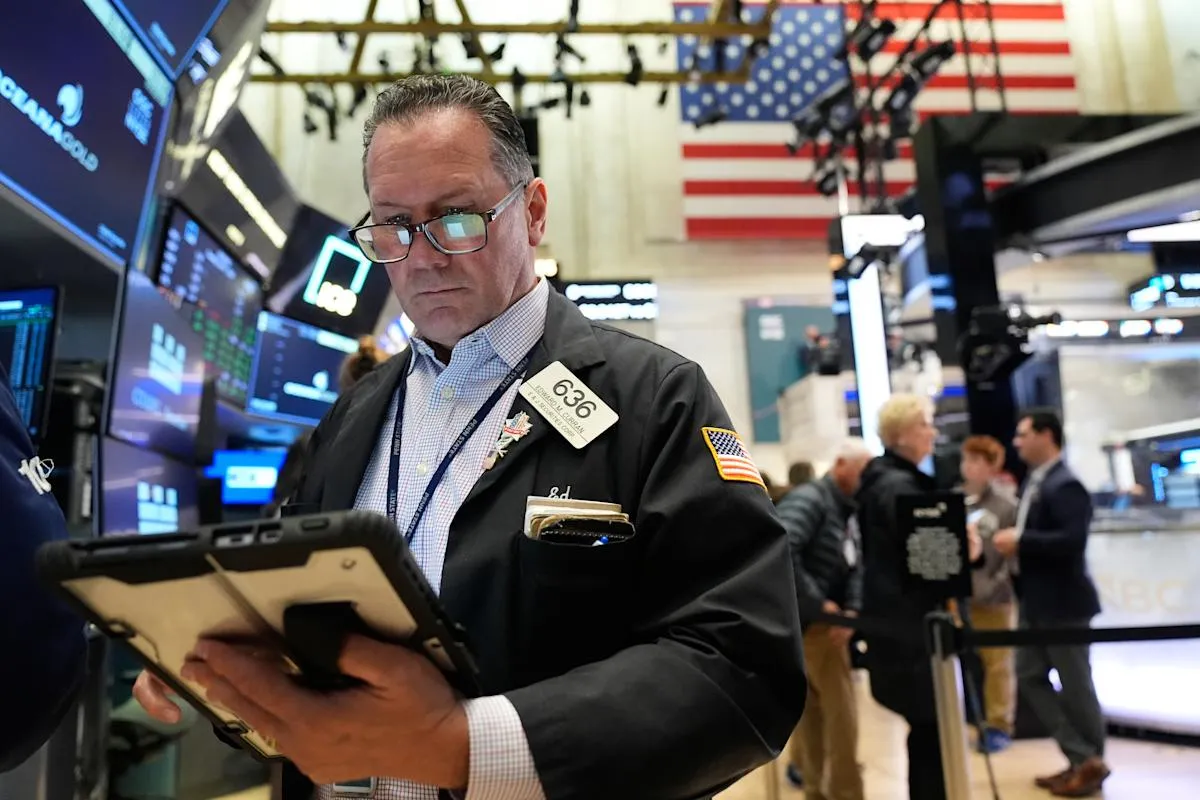
On Tuesday night, the first market verdict on the U.S.-Iran ceasefire was swift and dramatic. Equity futures in the United States rose sharply, Asian and European indexes followed higher, and crude prices fell hard after President Donald Trump said Washington would suspend a planned escalation and Iran signaled that traffic through the Strait of Hormuz could resume under a temporary arrangement. The move gave investors a short-term reason to price out the worst immediate energy shock, but it did not settle the larger question of whether the war itself is truly moving toward a durable pause.
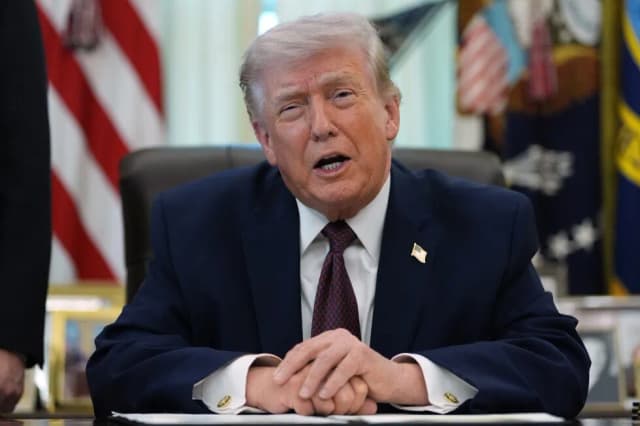
The ceasefire that emerged late Tuesday and carried into Wednesday was narrow, conditional and plainly incomplete. Trump presented it as a two-week opening for negotiations after Iran put forward a proposal he said was workable, while Iranian officials indicated ships could move through Hormuz during that window under oversight from Iran's military. That was enough to trigger a relief rally in risk assets because the strait is the central artery for Gulf energy exports and traders had spent weeks preparing for a prolonged disruption with global inflation consequences.Crude prices plunge and stocks surge after US, Iran ceasefire announcementchannelnewsasia.com·SecondaryThe ceasefire also led to a sharp drop in the dollar, which had become the safe haven while the war raged, with the yen, euro and pound all strengthening. Currency dealers monitor exchange rates as a screen shows South Korea's benchmark stock index (KOSPI) and the Korean won/USD exchange rate in a foreign exchange dealing room at the Hana Bank headquarters in Seoul on Apr 8, 2026.
The scale of the financial reaction showed how much fear had built up before the announcement. One Reuters-backed market report in the cluster said West Texas Intermediate settled near 93 dollars a barrel after dropping about 20 percent and Brent fell roughly 17 percent to around 92 dollars, while Dow futures pointed to gains of more than 1,300 points and S&P 500 and Nasdaq 100 futures were also up strongly. An AP market dispatch carried through Yahoo likewise said U.S. crude futures fell 14.3 percent to 96.83 dollars and Brent dropped 13.3 percent to 94.74 dollars as S&P 500 futures rose 2.3 percent and the Nikkei and Kospi posted outsized gains. Those are relief-move numbers, not calm-market numbers, and they underline how tightly war risk and energy pricing had become linked.Crude prices plunge and stocks surge after US, Iran ceasefire announcementchannelnewsasia.com·SecondaryThe ceasefire also led to a sharp drop in the dollar, which had become the safe haven while the war raged, with the yen, euro and pound all strengthening. Currency dealers monitor exchange rates as a screen shows South Korea's benchmark stock index (KOSPI) and the Korean won/USD exchange rate in a foreign exchange dealing room at the Hana Bank headquarters in Seoul on Apr 8, 2026.
By Wednesday, the details behind the rebound were already offering reasons for caution. Even after the ceasefire announcement, neither side gave a fully settled account of when the arrangement would begin or what would happen if talks broke down. Reuters reporting cited continuing restrictions in Hormuz, a need for permits, uncertainty about how ships would be routed around mines, and skepticism from shipping and trading circles about sending vessels back into the channel before there is more clarity. In other words, the oil panic eased faster than the underlying logistical problem did.Crude prices plunge and stocks surge after US, Iran ceasefire announcementchannelnewsasia.com·SecondaryThe ceasefire also led to a sharp drop in the dollar, which had become the safe haven while the war raged, with the yen, euro and pound all strengthening. Currency dealers monitor exchange rates as a screen shows South Korea's benchmark stock index (KOSPI) and the Korean won/USD exchange rate in a foreign exchange dealing room at the Hana Bank headquarters in Seoul on Apr 8, 2026.
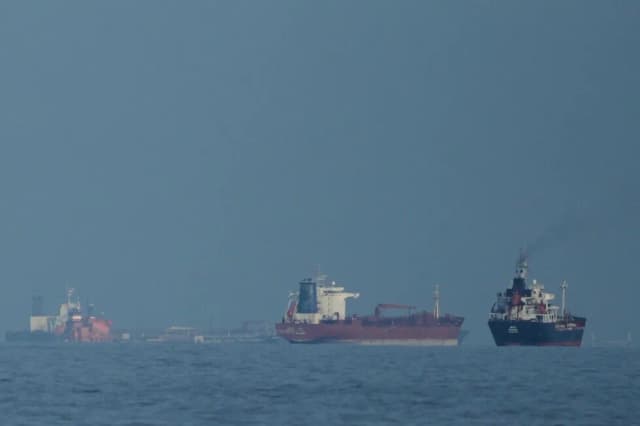
That gap matters because the conflict had already moved beyond headline diplomacy and into physical disruption. Cluster reporting says Iran's actions in and around Hormuz had helped create what analysts described as an enormous supply shock, leaving tankers queued in the Gulf and pushing gasoline, bond yields and inflation concerns higher before the ceasefire was announced. Reuters' broader follow-up also said nearby Gulf energy infrastructure had been struck and that shippers were still seeking operational guidance even after the political announcement. If the two-week pause does not mature into a firmer arrangement, markets could easily reverse some of this week's optimism.
The political picture is just as unstable. Washington framed the pause as a step toward negotiations and said Iran had agreed to major limits tied to its nuclear program, while Iranian officials publicly maintained that enrichment could continue and argued that ongoing Israeli strikes in Lebanon made broader talks unreasonable. Israel and the United States also made clear that the ceasefire did not cover Israel's parallel campaign against Hezbollah, a point Vice President JD Vance spelled out directly and Prime Minister Benjamin Netanyahu reinforced by saying Israel was ready to resume fighting at any moment.Oil prices plunge, stocks surge on US-Iran ceasefirechannelnewsasia.com·SecondaryFears that the ceasefire could fall apart while crude remains stuck in the Strait of Hormuz saw West Texas Intermediate oil jump around 3 per cent and Brent rise more than 2 per cent. Currency dealers work as an electronic board displays the exchange rate between the US dollar, the Korea Composite Stock Price Index (KOSPI), and South Korean won and the Korea Securities Dealers Automated Quotations (KOSDAQ) at the dealing room of a bank in Seoul, South Korea on Apr 8, 2026. That leaves the public with a ceasefire headline but several active fronts and competing definitions of what peace would even mean.Oil prices plunge, stocks surge on US-Iran ceasefirechannelnewsasia.com·SecondaryFears that the ceasefire could fall apart while crude remains stuck in the Strait of Hormuz saw West Texas Intermediate oil jump around 3 per cent and Brent rise more than 2 per cent. Currency dealers work as an electronic board displays the exchange rate between the US dollar, the Korea Composite Stock Price Index (KOSPI), and South Korean won and the Korea Securities Dealers Automated Quotations (KOSDAQ) at the dealing room of a bank in Seoul, South Korea on Apr 8, 2026.
There is also a domestic political layer that should not be ignored. Trump can point to lower oil prices, higher stock futures and a pause in threatened strikes as proof that pressure produced leverage. Supporters of the administration will argue that the White House forced Tehran to reopen a vital shipping lane without immediately carrying out the wider attack package that had been under discussion. Critics, however, can point to the fact that Iran still appears to retain major leverage in Hormuz, the terms of any nuclear concession remain disputed, and markets are celebrating an arrangement that may be less robust than the first headlines implied.Crude prices plunge and stocks surge after US, Iran ceasefire announcementchannelnewsasia.com·SecondaryThe ceasefire also led to a sharp drop in the dollar, which had become the safe haven while the war raged, with the yen, euro and pound all strengthening. Currency dealers monitor exchange rates as a screen shows South Korea's benchmark stock index (KOSPI) and the Korean won/USD exchange rate in a foreign exchange dealing room at the Hana Bank headquarters in Seoul on Apr 8, 2026.
A more conservative reading of the moment is that investors may be rewarding de-escalation before the strategic facts have caught up. The ceasefire reduced the immediate risk of a catastrophic overnight shock, and that matters. But it did not erase the backlog of trapped vessels, eliminate doubts about insurer and shipowner appetite, settle the Iran-Hezbollah-Israel triangle, or produce a common account of the end state on uranium enrichment and regional deterrence. Markets often move on the first derivative of risk; governments and shippers still have to live with the underlying exposure.
What happens next over the coming days will determine whether this story becomes a turning point or just another violent swing in a war-driven market cycle. Talks are supposed to begin soon, and the near-term test is simple: whether commercial transit through Hormuz normalizes, whether fighting around Lebanon pulls Iran and Israel back toward escalation, and whether Washington and Tehran can narrow the obvious distance between their public red lines. Until those questions are answered, the rally in stocks and the drop in oil look less like a verdict on peace than a bet that the next two weeks will be less dangerous than the last two.
That distinction is why this story belongs on the front page even after the first price shock has faded. A temporary pause in bombing is one thing; restoring confidence in a waterway that handles a major share of the world's seaborne oil is another. For governments, central banks, freight operators and households, the question is no longer only whether Washington and Tehran can step back for a fortnight. It is whether they can prove that the strategic choke point at the heart of the crisis is moving from coercion back toward routine commerce.Crude prices plunge and stocks surge after US, Iran ceasefire announcementchannelnewsasia.com·SecondaryThe ceasefire also led to a sharp drop in the dollar, which had become the safe haven while the war raged, with the yen, euro and pound all strengthening. Currency dealers monitor exchange rates as a screen shows South Korea's benchmark stock index (KOSPI) and the Korean won/USD exchange rate in a foreign exchange dealing room at the Hana Bank headquarters in Seoul on Apr 8, 2026.
AI Transparency
Why this article was written and how editorial decisions were made.
Why This Topic
This was the strongest distinct cluster on the board because it combined geopolitics, energy security, shipping disruption and an immediate global market reaction. It is broader and more consequential than a single corporate deal: Hormuz affects oil, inflation, freight, central-bank expectations and political risk across multiple regions. The cluster also offered a natural balanced frame, letting the article cover the relief rally while testing whether the ceasefire is substantive or only tactical.
Source Selection
The draft relies primarily on the richest cluster signals: the Reuters/Yahoo market report and the AP/Yahoo market wrap for the quantifiable moves in oil, futures and Asian equities, plus Reuters' broader follow-up for the latest political dispute over Lebanon, Hormuz shipping restrictions and competing U.S.-Iran narratives. Those sources are strong enough to support a market-and-geopolitics synthesis without overreaching into unsupported claims.
Editorial Decisions
Balanced straight-news treatment with a market lead but geopolitical skepticism underneath. The piece avoids moralizing, gives the White House case, the Iranian case, and a more cautious market-reading. It stays descriptive rather than celebratory and treats the ceasefire as provisional rather than settled.
Reader Ratings
About the Author
Sources
- 1.channelnewsasia.comSecondary
- 2.theguardian.comSecondary
- 3.channelnewsasia.comSecondary
- 4.finance.yahoo.comSecondary
- 5.finance.yahoo.comSecondary
- 6.sj.comUnverified
- 7.npr.orgSecondary
- 8.marketwatch.comUnverified
- 9.investing.comSecondary
- 10.aljazeera.comSecondary
- 11.finance.yahoo.comSecondary
Editorial Reviews
1 approved · 0 rejectedPrevious Draft Feedback (2)
• depth_and_context scored 4/3 minimum: The article provides good context by explaining the significance of the Strait of Hormuz and the potential for global inflation. However, it could benefit from briefly explaining the historical tensions between the U.S. and Iran to provide a more complete understanding of the current situation. • analytical_value scored 4/3 minimum: The article goes beyond simply reporting events and offers analysis of the market reaction, the underlying logistical problems, and the political implications. The comparison between market reactions and the 'underlying exposure' is particularly insightful. Warnings: • [article_quality] narrative_structure scored 3 (borderline): The article generally follows a logical flow, starting with the market reaction and then delving into the details and caveats. However, the nut graf could be more prominent and explicitly state the central argument about the ceasefire's limitations. • [article_quality] perspective_diversity scored 3 (borderline): The article incorporates perspectives from both the U.S. and Iranian officials, as well as market analysts and shipping circles. While it mentions critics of Trump's administration, including perspectives from within the US, it could benefit from including a wider range of voices, such as those of Lebanese civilians impacted by the conflict. • [article_quality] filler_and_redundancy scored 2 (borderline): The frequent citation markers and repetition of data points (e.g., multiple reports stating similar price drops) create unnecessary clutter and detract from the article's clarity. Streamline the reporting and reduce redundant phrasing to improve readability and conciseness. • [article_quality] language_and_clarity scored 3 (borderline): The writing is generally clear, but occasionally uses jargon ( • [article_quality] language_and_clarity scored 3 (borderline): The writing is generally clear, but occasionally uses jargon (“first derivative of risk”) without sufficient explanation for a broader audience. Avoid politically loaded labels; instead of simply stating 'supporters of the administration,' describe their specific arguments.
1 gate errors: • [freshness] Story is over 24 hours old and lacks temporal language (e.g., 'last week', 'on Monday', 'gestern', 'letzte Woche')

Discussion (0)
No comments yet.