One year after Trump’s tariff push, Americans are still paying more while the trade strategy remains unsettled
A year after Donald Trump launched his broad tariff push, households and businesses are still absorbing higher costs, the legal basis of the original policy has been struck down, and Washington is still trying to preserve parts of the strategy through narrower authorities.[1][2]
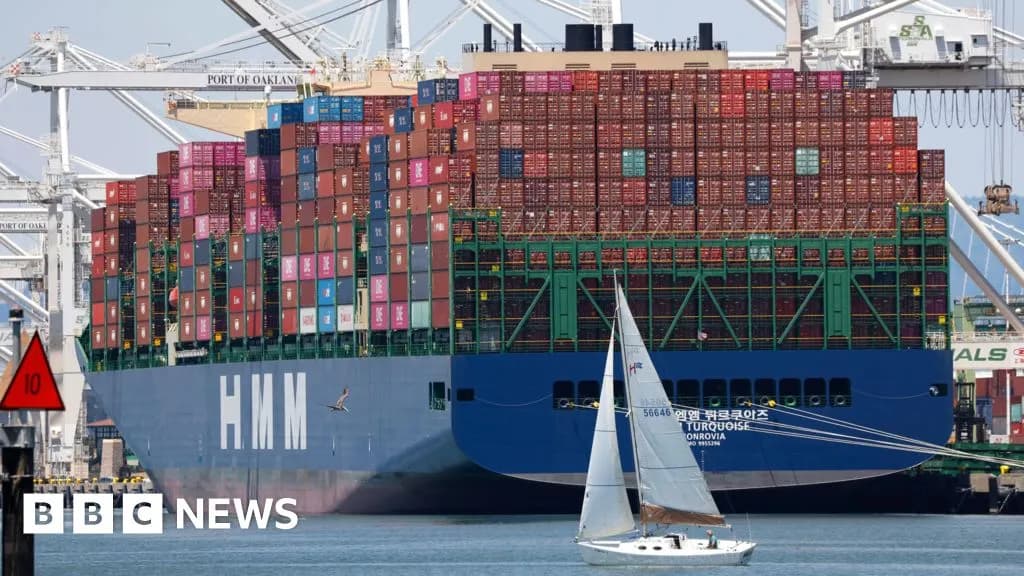
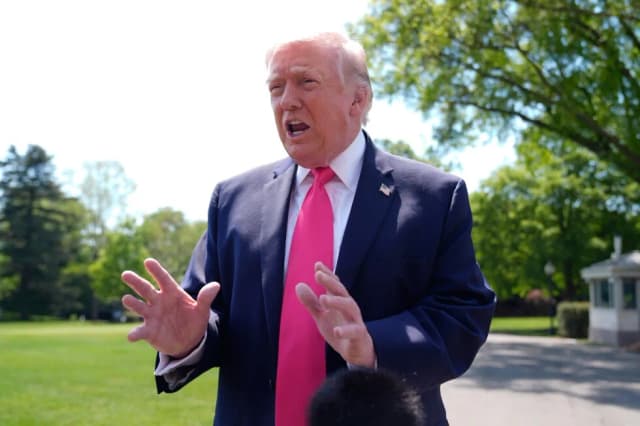
One year after Donald Trump used a Rose Garden event to launch his so-called Liberation Day tariff program, the most striking fact is not that the trade debate is over, but that the costs are still being sorted out in court, in boardrooms and at household kitchen tables. The original promise was straightforward: higher tariffs would restore manufacturing, force trading partners to make concessions, raise money for the federal government and make the United States economically stronger. What happened instead is more complicated. Courts have knocked out the legal basis for the broad emergency tariffs, importers may be entitled to large refunds, and the burden of the duties that were collected appears to have fallen mostly on American businesses and consumers rather than on foreign governments.Trump’s tariffs one year on: How Americans are paying the pricealjazeera.com·SecondaryOne year ago today, during a Rose Garden ceremony at the White House in Washington, US President Donald Trump announced a new 10 percent global tariff as part of a sweeping executive order he dubbed “Liberation Day”. The immediate fallout from his announcement was severe, with the stock market suffering its worst drop since the pandemic. In the following days, countries scrambled to make deals with Washington or retaliate with their own levies.
That is why the anniversary has become more than a referendum on one trade policy. It now looks like a test of how far a president can go under emergency powers, how much disruption companies can absorb before they reroute supply chains, and how willing voters are to tolerate higher prices in exchange for a more confrontational trade posture. Supporters of Trump’s approach still argue that tariffs remain one of the few tools Washington can use quickly against strategic rivals and against trade arrangements they view as one-sided. Critics reply that even if tariffs can create leverage in selected cases, the broad version rolled out last year produced a familiar result: noise, uncertainty and higher costs at home.Trump’s tariffs one year on: How Americans are paying the pricealjazeera.com·SecondaryOne year ago today, during a Rose Garden ceremony at the White House in Washington, US President Donald Trump announced a new 10 percent global tariff as part of a sweeping executive order he dubbed “Liberation Day”. The immediate fallout from his announcement was severe, with the stock market suffering its worst drop since the pandemic. In the following days, countries scrambled to make deals with Washington or retaliate with their own levies.
The legal setback is central to the story. According to the cluster reporting, the Supreme Court ruled on February 20 that most of Trump’s broad tariffs were illegal because the president could not impose sweeping, open-ended tariffs simply by invoking a national emergency. The BBC account describes that decision as striking down the Liberation Day duties altogether and putting into question a major stream of tariff revenue that had already flowed to Washington.‘Liberation day’ one year later: What Trump’s tariffs are costing Americamarketwatch.com·Unverified That did not end the policy fight. The administration moved within hours to use a different statute for a temporary tariff that is set to expire in July, showing that the White House was not prepared to abandon the strategy even after losing its preferred legal foundation.Trump’s tariffs one year on: How Americans are paying the pricealjazeera.com·SecondaryOne year ago today, during a Rose Garden ceremony at the White House in Washington, US President Donald Trump announced a new 10 percent global tariff as part of a sweeping executive order he dubbed “Liberation Day”. The immediate fallout from his announcement was severe, with the stock market suffering its worst drop since the pandemic. In the following days, countries scrambled to make deals with Washington or retaliate with their own levies.
That legal pivot matters because it changes the political argument. The White House and Trump allies can say the courts objected to the legal path, not necessarily to the broader trade aim. From that perspective, the setback is procedural, not philosophical: if one authority fails, use another, narrower one and keep bargaining. But opponents have a ready counterargument. They say the ruling exposed a deeper problem with the entire approach: a willingness to use expansive executive power first and work out the economic consequences later. For businesses that need predictable rules to plan sourcing, inventory and pricing, that distinction is not academic.Trump’s tariffs one year on: How Americans are paying the pricealjazeera.com·SecondaryOne year ago today, during a Rose Garden ceremony at the White House in Washington, US President Donald Trump announced a new 10 percent global tariff as part of a sweeping executive order he dubbed “Liberation Day”. The immediate fallout from his announcement was severe, with the stock market suffering its worst drop since the pandemic. In the following days, countries scrambled to make deals with Washington or retaliate with their own levies.
On the economic side, the reporting in the cluster leaves little doubt that the policy changed prices and incentives. Between implementation and the court ruling, the average effective U.S. tariff rate rose from 2.6 percent to more than 13 percent, according to economists cited by Al Jazeera. The BBC similarly reports that the average effective tariff rate stood at roughly 10 percent, up from about 2.5 percent at the start of last year. Even allowing for differences in measurement windows, both signals point in the same direction: the United States moved from relatively low tariff levels to its highest trade barriers in decades. That was enough to jolt supply chains, alter trade flows and force importers to decide whether to swallow the costs or pass them on.Trump’s tariffs one year on: How Americans are paying the pricealjazeera.com·SecondaryOne year ago today, during a Rose Garden ceremony at the White House in Washington, US President Donald Trump announced a new 10 percent global tariff as part of a sweeping executive order he dubbed “Liberation Day”. The immediate fallout from his announcement was severe, with the stock market suffering its worst drop since the pandemic. In the following days, countries scrambled to make deals with Washington or retaliate with their own levies.
The evidence in the cluster suggests many firms chose to pass on at least part of the bill. Economists at the Federal Reserve Bank of New York found that nearly 90 percent of the economic burden from tariffs fell on U.S. businesses and consumers, with foreign exporters absorbing only a small share. Surveys cited in the same report found roughly half of businesses subject to tariffs raised prices in response. The BBC adds that Goldman Sachs estimated about 55 percent of the new charges were passed on to consumers last year, helping lift inflation by roughly half a percentage point to around 3 percent relative to where it otherwise would have been. Those are not trivial side effects. They help explain why a policy sold as pressure on foreign producers became, in day-to-day political terms, a domestic affordability story.Trump’s tariffs one year on: How Americans are paying the pricealjazeera.com·SecondaryOne year ago today, during a Rose Garden ceremony at the White House in Washington, US President Donald Trump announced a new 10 percent global tariff as part of a sweeping executive order he dubbed “Liberation Day”. The immediate fallout from his announcement was severe, with the stock market suffering its worst drop since the pandemic. In the following days, countries scrambled to make deals with Washington or retaliate with their own levies.
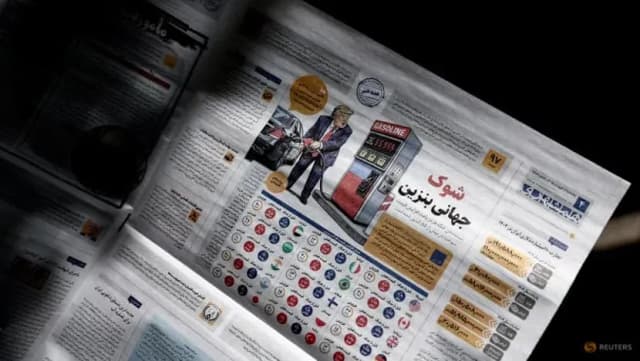
For households, the argument is even easier to understand. Al Jazeera reports that the Tax Foundation estimated U.S. households paid more than $1,000 extra in 2025 for the same groceries, clothes and cars they were already buying. The same report says lower-income households felt the pressure more sharply because they spend a larger share of income on essential goods. Even after the administration carved out exemptions for more than 237 categories of food imports in November, and even with the later shift toward a flatter 10 percent tariff, the Tax Foundation projection still put the average household cost at about $600.Trump’s tariffs one year on: How Americans are paying the pricealjazeera.com·SecondaryOne year ago today, during a Rose Garden ceremony at the White House in Washington, US President Donald Trump announced a new 10 percent global tariff as part of a sweeping executive order he dubbed “Liberation Day”. The immediate fallout from his announcement was severe, with the stock market suffering its worst drop since the pandemic. In the following days, countries scrambled to make deals with Washington or retaliate with their own levies. In other words, the policy’s defenders can say the burden may be lower than it was at the peak, but the available reporting still describes a meaningful consumer cost.Trump’s tariffs one year on: How Americans are paying the pricealjazeera.com·SecondaryOne year ago today, during a Rose Garden ceremony at the White House in Washington, US President Donald Trump announced a new 10 percent global tariff as part of a sweeping executive order he dubbed “Liberation Day”. The immediate fallout from his announcement was severe, with the stock market suffering its worst drop since the pandemic. In the following days, countries scrambled to make deals with Washington or retaliate with their own levies.
Trump’s defenders have not lacked arguments of their own. They can point to the substantial customs revenue that flowed in while the tariffs were in force and say the policy proved Washington still has leverage when it is willing to use it. Al Jazeera reports that the United States collected more than $287.1 billion in customs duties in 2025 and another $64.4 billion so far in 2026. The BBC separately says Washington had collected about $260 billion before the Supreme Court decision raised the prospect of returning more than half of it. A conservative case for the tariffs would stress that revenue, the pressure placed on China-linked supply chains, and the message sent to allies and rivals that the U.S. would no longer accept old trade assumptions without a fight.‘Liberation day’ one year later: What Trump’s tariffs are costing Americamarketwatch.com·Unverified That case is not frivolous. The BBC reports that Chinese goods ended 2025 with tariffs roughly 20 percent higher than at the start of the year, while U.S. imports from China plunged about 30 percent and U.S. shipments to China dropped by more than 25 percent.‘Liberation day’ one year later: What Trump’s tariffs are costing Americamarketwatch.com·Unverified
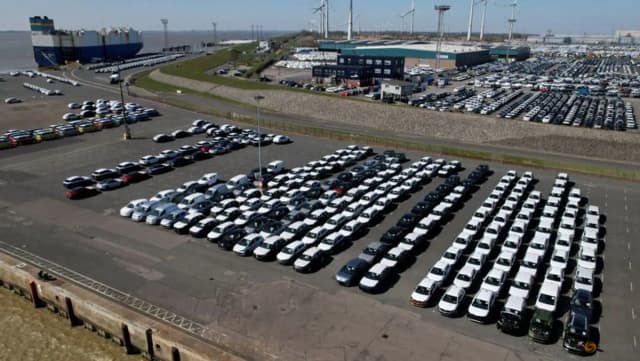
Still, the same data also undercuts triumphal claims. A sharp fall in direct U.S.-China trade does not mean dependence vanished; the BBC reports that increased imports from Vietnam and Mexico, where Chinese firms have expanded investment, suggest commercial ties did not simply disappear but were partly rerouted. Global trade also did not collapse. Instead, the reporting points to a rewiring: firms diversified, allies looked for new buyers and sellers, and countries that felt squeezed by Washington looked for openings elsewhere. Canada, for example, is described in the BBC report as moving to slash tariffs on thousands of Chinese-made electric vehicles, a step framed as a sharp turn away from U.S. preferences and one likely unwelcome to American carmakers.‘Liberation day’ one year later: What Trump’s tariffs are costing Americamarketwatch.com·Unverified That is a reminder that trade pressure can produce countermoves, not just concessions.‘Liberation day’ one year later: What Trump’s tariffs are costing Americamarketwatch.com·Unverified
The broader diplomatic effects may prove just as important as the direct price effects. The BBC notes that even where retaliation remained limited, tariff tensions spilled into non-trade areas, with Canadian travel to the United States plunging 20 percent and costing the U.S. economy more than $4 billion according to the U.S. Travel Association. The report also says the tariff dispute complicated American efforts to rally partners on unrelated priorities, because allies asked why they should cooperate strategically while being hit economically.‘Liberation day’ one year later: What Trump’s tariffs are costing Americamarketwatch.com·Unverified That complaint fits a long-running conservative divide. Some on the right argue hard bargaining is precisely how allies should be treated if they have become complacent; others warn that treating every partner like a commercial adversary can burn political capital Washington may need in bigger confrontations.‘Liberation day’ one year later: What Trump’s tariffs are costing Americamarketwatch.com·Unverified
There is also a tension between the policy’s strategic ambition and its measurable results at home. Trump promised the tariffs would restore manufacturing and make the United States richer. Yet the cluster reporting says manufacturing spent much of last year in contraction and foreign investment into the U.S. fell, even though some firms pledged new spending. The economy did keep growing, with the BBC reporting 2.1 percent growth and unemployment at 4.4 percent in December. That gives tariff supporters room to say the economy absorbed the shock better than critics predicted.‘Liberation day’ one year later: What Trump’s tariffs are costing Americamarketwatch.com·Unverified But it also weakens any claim that the policy produced a dramatic renaissance. The more defensible reading is narrower: the economy did not collapse, but neither did the sweeping promises clearly materialize.‘Liberation day’ one year later: What Trump’s tariffs are costing Americamarketwatch.com·Unverified
That leaves the politics in an awkward middle ground. Many voters, especially working-class voters who are skeptical of globalization, remain open to tariffs in principle because they see them as a sign that Washington is finally willing to defend national industry. They are not necessarily wrong to think free-trade orthodoxy left parts of the industrial base hollowed out, and there is a legitimate argument that some strategic sectors deserve stronger protection. But those same voters also notice grocery bills, car prices and financing costs. A tariff policy that looks tough in a speech can become a liability if families conclude they are the ones writing the check.Trump’s tariffs one year on: How Americans are paying the pricealjazeera.com·SecondaryOne year ago today, during a Rose Garden ceremony at the White House in Washington, US President Donald Trump announced a new 10 percent global tariff as part of a sweeping executive order he dubbed “Liberation Day”. The immediate fallout from his announcement was severe, with the stock market suffering its worst drop since the pandemic. In the following days, countries scrambled to make deals with Washington or retaliate with their own levies.
The unfinished question is what happens next. The administration has already shown it will try to preserve tariff pressure through narrower legal channels rather than concede the larger argument. Businesses, meanwhile, are unlikely to assume that the tariff era is over simply because one legal architecture failed. Many have already adjusted supply chains, passed costs forward, or delayed investments until they see whether July brings another extension, replacement or escalation. So the real legacy of Trump’s tariff year may be less about one court ruling than about a new baseline: trade policy is now a more aggressive, less predictable instrument of domestic politics and foreign strategy than it was before Liberation Day.Trump’s tariffs one year on: How Americans are paying the pricealjazeera.com·SecondaryOne year ago today, during a Rose Garden ceremony at the White House in Washington, US President Donald Trump announced a new 10 percent global tariff as part of a sweeping executive order he dubbed “Liberation Day”. The immediate fallout from his announcement was severe, with the stock market suffering its worst drop since the pandemic. In the following days, countries scrambled to make deals with Washington or retaliate with their own levies.
For supporters, that new baseline is overdue and maybe even healthy, because it forces companies and allies to stop assuming the American market comes without strings. For critics, it is a warning that symbolic toughness can mutate into a tax on one’s own economy when it is deployed too broadly and defended too loosely. Both views deserve hearing. But after a year of litigation, rerouted trade, higher consumer costs and unresolved strategy, the simplest conclusion is that Americans did not get the clean victory they were promised. They got a more protectionist country, a more contested legal landscape and a bill that, at least in large part, landed at home.Trump’s tariffs one year on: How Americans are paying the pricealjazeera.com·SecondaryOne year ago today, during a Rose Garden ceremony at the White House in Washington, US President Donald Trump announced a new 10 percent global tariff as part of a sweeping executive order he dubbed “Liberation Day”. The immediate fallout from his announcement was severe, with the stock market suffering its worst drop since the pandemic. In the following days, countries scrambled to make deals with Washington or retaliate with their own levies.
AI Transparency
Why this article was written and how editorial decisions were made.
Why This Topic
This is the strongest available non-duplicate cluster because it ties a high-salience domestic economic issue to a clear one-year news peg, a Supreme Court intervention, household-cost effects and a still-open policy fight. It is more durable and consequential than thinner business or entertainment items on the board, and it reaches across law, trade, inflation and electoral politics in a way that makes it broadly newsworthy.
Source Selection
The cluster provides two strong usable core sources with overlapping but distinct angles: Al Jazeera on household costs, legal fallout and tariff incidence, and BBC on global trade rewiring, macro effects and diplomatic consequences. That combination is sufficient for a balanced article because it supports both the pro-tariff strategic case and the anti-tariff consumer-cost case. A third MarketWatch item is paywalled/unusable, so the draft relies primarily on the two validated source texts and avoids unsupported additions.
Editorial Decisions
Neutral, descriptive framing. Gives genuine space to the Trump/pro-tariff argument that tariffs can create leverage and defend national industry, while also weighing consumer-cost, legal and diplomatic critiques. Avoids moralizing language and keeps the emphasis on measurable effects, competing interpretations and unresolved next steps.
Reader Ratings
About the Author
Sources
- 1.aljazeera.comSecondary
- 2.marketwatch.comUnverified
- 3.bbc.comSecondary
Editorial Reviews
1 approved · 0 rejectedPrevious Draft Feedback (1)
Warnings: • [citation_coverage] Gate check failed: Service request failed. Status: 502 (Bad Gateway) • [article_quality] Gate check failed: Service request failed. Status: 502 (Bad Gateway) • [image_relevance] Image relevance check failed: Service request failed. Status: 502 (Bad Gateway)

Discussion (0)
No comments yet.